
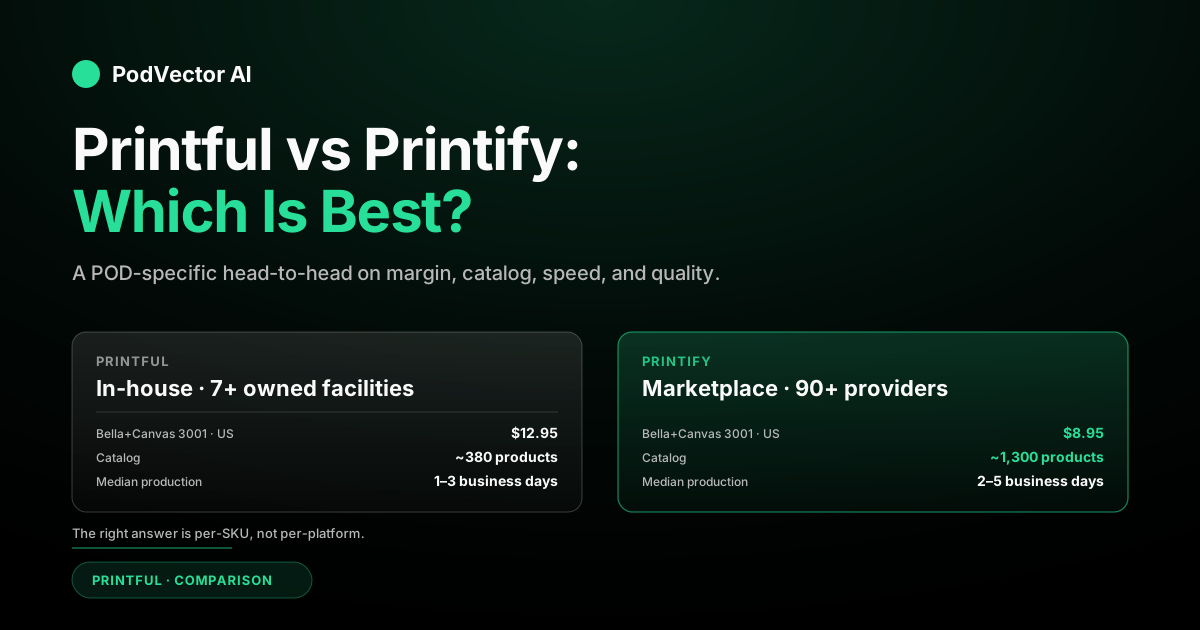
Quick Answer: For most POD sellers in 2026, Printify wins on margin and catalog breadth — a Bella+Canvas 3001 tee lands at $8.95 on Printify Premium versus $12.95 on Printful, and the catalog is roughly 900 products versus 340. Printful wins on consistency, in-house quality control, and a tighter Shopify experience.
The real answer is per-SKU, not per-platform. The same merchant can profitably sell hoodies on Printful and tees on Printify in the same store, because each platform's economics flip depending on garment, region, and order volume.
Below: every axis the top comparison guides cover — pricing, quality, speed, shipping, branding, integrations — plus the part nobody else writes about: how to actually know which supplier is more profitable for your catalog.
Printful vs Printify: quick comparison table
Every axis below is unpacked further in its own section. This table is the 30-second answer.
| Axis | Printful | Printify |
|---|---|---|
| Bella+Canvas 3001 tee, US base cost | $12.95 | $8.95 (Premium) / $10.95 (Free) |
| Catalog size (2026) | ~340 products | ~900 products |
| Production model | In-house (owned facilities) | Marketplace (100+ providers, 140+ locations) |
| Median production time | 1–3 business days | 2–5 business days (provider-dependent) |
| Quality consistency | High — same machines, same staff | Variable — depends on which provider routes the order |
| Subscription tier | Growth $24.99/mo (up to 33% off) | Premium $24.99/mo (up to 20% off) |
| Branding inserts (packing slips, stickers) | Native, broad | Limited and provider-dependent |
| Native Shopify, Etsy, WooCommerce, TikTok Shop | Yes | Yes |
| Best for | Premium brands, predictable quality | Margin optimization, catalog breadth |
What is Printful?
Printful is a vertically integrated POD supplier that owns and operates its own fulfillment centers in the US, EU, Mexico, Japan, and Australia. Every order flows through facilities Printful runs directly — no subcontractors, no provider-routing logic.
That single design choice is the source of every Printful pro and every Printful con. Quality is more consistent because the same DTG and embroidery machines, the same staff, and the same QA standards apply to every order. Costs are higher because in-house facilities carry more overhead than a marketplace of independent print shops competing on price.
Printful is positioned for sellers who treat the supplier as part of the brand. If the customer's experience matters more than squeezing the last dollar of contribution margin, Printful's architecture is the one designed for you.
What is Printify?
Printify is a marketplace that connects merchants to 100+ independent print providers operating from 140+ locations worldwide. When you list a product, you're effectively listing it against whichever provider you select — Monster Digital, SwiftPOD, Drive Fulfillment, Dimona, and dozens of others.
Because providers compete inside the Printify catalog, base costs run consistently lower than Printful's. The trade-off is that quality and shipping speed become provider-specific. A great experience with Provider A doesn't predict the experience with Provider B on the same SKU.
Printify is positioned for sellers who treat the supplier as a commodity input. If you're optimizing for contribution margin and willing to do the work of evaluating providers per SKU, Printify gives you more levers.
Pricing and real margins
Pricing is where most Printful vs Printify comparisons stop. It shouldn't — but it's also the axis with the cleanest answer, so start here.
On a benchmark Bella+Canvas 3001 tee shipping in the US, Printful's base cost is $12.95 with no subscription, dropping to roughly $9.50 on the Growth plan ($24.99/month, 25–33% off most categories). Printify's base cost on the same SKU through a top-tier provider runs $10.95 on the free plan and $8.95 on Printify Premium ($24.99/month, 20% off). Printify wins by $1–4 per unit depending on tier — and that gap widens on hoodies, where Printful's $30+ Gildan 18500 base costs run $5–7 above the Printify equivalent.
At a $25 retail price, $4 of base-cost difference is about 16 points of contribution margin. At 100 sales per month, that's $400. At 1,000 sales per month, that's $4,000 — real money, before a single ad dollar runs.
But base cost is the cheap part of the comparison. The expensive part is the rest of the unit P&L: shipping, the platform fee, the payment processor fee, the ad cost to acquire the order, and the refund/reprint allowance for defects. A $4 base-cost win on Printify can disappear if the provider's shipping rate to your top customer region runs $3 higher than Printful's, or if a higher-variance provider drives a 4% reprint rate versus Printful's 1%.
For the full unit-economics walkthrough on Printful, see the complete guide to Printful costs and fees. For the equivalent on Printify, see the guide to Printify costs, fees, and discounts. Both walk the math line by line.
Product catalog and variety
Printful carries roughly 340 products in 2026 — apparel-heavy, with strong coverage of tees, hoodies, sweatshirts, hats, and a curated set of home goods, drinkware, and wall art. The catalog is small on purpose. Every SKU has been reviewed, mockup-tested, and validated by Printful's in-house team.
Printify carries roughly 900 products. The breadth is genuinely useful — all-over-print bomber jackets, framed canvas at sizes Printful doesn't offer, ceramic options across multiple providers, pet products, swimwear. If your store's product mix lives outside the standard tee-and-hoodie catalog, Printify's catalog is the one that actually fits.
Catalog breadth has a hidden cost. With 900 products spread across 100+ providers, the seller's job becomes "which provider handles this SKU well?" rather than "which SKU should I sell?" Printful collapses that decision; Printify hands it back to you.
Print quality and consistency
Both platforms produce quality work in 2026. The right framing isn't "which is higher quality" — it's "which is more consistent."
Printful runs the same Kornit Atlas and Avalanche printers, the same garment-prep workflow, and the same QA pass across all its facilities. A 2024 Riga-printed shirt and a 2026 Charlotte-printed shirt come out within tight tolerances on color, ink saturation, and placement. That consistency is what brand-builders pay for.
Printify's quality is provider-specific. Top-tier providers — Monster Digital, SwiftPOD on premium tier, Drive Fulfillment for embroidery — produce work that is genuinely indistinguishable from Printful's. Lower-tier providers in the catalog produce work that is visibly worse: ink that cracks after two washes, off-axis placement, color drift between runs.
The implication for sellers: on Printify, your quality is only as good as your provider-selection discipline. The platform doesn't enforce a floor — you do, by ordering samples from every provider you list and rejecting the ones that don't clear your bar.
Fulfillment speed
Printful publishes a 1–3 business day production SLA and hits it consistently. Order placed Monday morning ships Wednesday afternoon for the median US order.
Printify publishes a 2–5 business day SLA, and the actual experience depends on the provider. SwiftPOD and Monster Digital regularly hit 1–2 day production. Less-trafficked providers run 4–6 business days, especially around holidays.
For a seller running primarily on Etsy — where Etsy's own dashboard ranks listings partly by ship-on-time performance — the difference compounds. Printful's narrower distribution of fulfillment times is worth real money in Etsy search visibility, even if median speeds look similar on paper.
For deeper detail on Printful's shipping zones and SLA, see the complete guide to Printful shipping rates, times, and zones. For Printify, see the complete guide to Printify shipping.
Shipping rates and global reach
Both platforms ship globally. The interesting question is how each routes orders to minimize distance and cost.
Printful auto-routes orders to the nearest of its facilities (US East, US West, EU/Riga, EU/Spain, MX, JP, AUS, CA). For a seller with US-heavy traffic, this works cleanly — 60–80% of orders ship from a US facility, US shipping rates apply. For a seller with significant EU traffic, Printful's Riga and Barcelona facilities handle most EU orders without crossing customs.
Printify routes orders to whichever provider you selected when listing the product. If you listed a tee through a US-based provider and the order ships to Germany, the order ships internationally — slow and expensive — unless you also list the same SKU through a Printify EU provider and let the platform route by destination. That requires more setup but unlocks materially better economics for cross-border sellers.
For US-only sellers, the shipping difference between the two platforms is small. For sellers with meaningful EU, UK, AU, or Canadian traffic, Printify's marketplace structure can be cheaper if configured carefully — and meaningfully more expensive if not.
Branding and customization
Printful's branding options are deeper and apply uniformly. Custom packing slips, branded stickers, branded inside-collar labels, and pack-in marketing inserts work on every order regardless of which Printful facility fulfills it. The "feels like a real brand, not a POD store" experience is on rails.
Printify's branding options are provider-dependent and inconsistent. Some providers support packing slips with your logo; some don't. Inside-collar relabeling is available on premium providers like Monster Digital but not across the catalog. If you need every order to feel like it came from your brand — same insert, same sticker, same label — Printful's architecture is the one that delivers that without per-order verification.
For sellers building a long-term brand, this difference is worth more than the per-unit margin gap on a single SKU. For sellers running quick-flip product drops where the customer's brand expectation is closer to "POD shirt I saw on TikTok," it matters less.
Integrations and ease of use
Both platforms integrate natively with Shopify, Etsy, WooCommerce, eBay, TikTok Shop, Wix, Squarespace, and Amazon (with caveats). Both push order line items, product variants, and fulfillment status back to the storefront automatically.
Printful's Shopify integration feels tighter — fewer edge cases, faster sync, cleaner mockup generation. Its built-in Design Maker is the more capable of the two free design tools, with layered editing, clipart, and AI-assisted image generation, while Printify's Product Creator stays closer to a straightforward mockup placer. The mockup generator itself is more polished than Printify's, which matters because mockups drive conversion as much as the underlying product does.
Printify's integration breadth is similar but the depth varies. The good integrations (Shopify, Etsy) are excellent. The longer-tail integrations (Squarespace, Wix) work but show their seams more often than Printful's.
For deeper coverage of how Printful integrates with each platform, see the complete guide to Printful integrations. For Printify, see the complete guide to Printify integrations.
Best for which seller
Both platforms work for most POD sellers. The interesting question is which works best for which kind of seller.
Pick Printful if:
- You're building a brand that depends on consistent customer experience — packaging, color, fit, feel.
- Your traffic is US-weighted or split across US + EU only, and you want auto-routing without supplier setup.
- Your product mix lives in the standard apparel + drinkware + wall art catalog and you don't need exotic SKUs.
- You're running paid social where return rates over 5% kill the unit economics — Printful's lower defect rate matters more than the per-unit cost gap.
Pick Printify if:
- You're optimizing for margin and willing to do per-provider sample-ordering and quality screens.
- Your product mix needs catalog breadth Printful doesn't carry — all-over print, framed canvas at unusual sizes, pet products, swimwear, ceramic mugs from multiple makers.
- You ship internationally enough that single-provider routing materially raises shipping costs.
- You're running organic Etsy or TikTok Shop volume where unit economics are thin and even $2–4 per order matters.
Run both if:
- Your store has more than ~15 SKUs and the optimal supplier varies by garment, by region, or by season.
- You want supplier diversification — single-supplier outages have been a real risk in 2024–2026 (Printful's Riga delays and Printify provider-rotation incidents both made the news).
Running both is the answer most sellers underestimate. The infrastructure cost of using two POD platforms is small. The margin upside of routing each SKU to its right supplier is real. See Printful alternatives: the complete comparison for the broader supplier landscape — Printify isn't the only Printful alternative, and the right multi-supplier mix often includes Gelato or CustomCat alongside.
The 2026 Printful + Printify merger — what it means
In late 2024, Printful and Printify announced plans to merge as equal partners under a single parent company. As of mid-2026, both platforms continue to operate separately under their existing brand names, separate dashboards, separate product catalogs, and separate pricing.
The merger doesn't change which platform is right for you today. Existing accounts on either side continue running unchanged. Sellers signing up in 2026 still pick Printful or Printify based on the trade-offs above, not based on the eventual merged entity.
What the merger does change is the long-term strategic question of supplier diversification. If both platforms eventually consolidate operations, the value of running on a non-merged alternative — Gelato, Gooten, CustomCat, SPOD — increases as a hedge against single-parent risk. Several POD sellers we've talked to are explicitly piloting a third supplier in 2026 for exactly this reason.
The per-SKU truth most comparisons miss
Every comparison guide above treats "Printful vs Printify" as a platform-level question. That framing produces a platform-level answer: pick A for brand, pick B for margin.
The actual question every POD seller has to answer is per-SKU. On your Bella+Canvas 3001 in heather grey, shipping to your top region, with your ad-blended CAC, which supplier produces a higher contribution dollar per order? The answer changes with garment, with region, with order volume, with season.
This is the gap none of the top comparison articles fill. They quote averages — $4 base-cost difference, 99% accuracy, 1–3 day fulfillment — and stop there. The seller's actual P&L runs on specifics, not averages.
Closing that gap requires three things working together. First, every order's supplier-charged cost flowing into a single source of truth alongside the order's revenue, ad cost, refunds, and processor fees. Second, the math run per-SKU and per-supplier so a tee that's profitable on Printify and a hoodie that's profitable on Printful both show up clearly. Third, the answer surfaced fast enough that a seller can act on it — switching a single SKU's supplier weekly is high-leverage if the data is fresh, useless if it's a quarter old.
This is why PodVector AI built Victor the way they did. Victor brings together your Shopify, Printful, Printify, Meta, and Google numbers for every order, so you can ask him "which supplier is more profitable on my hoodies in EU shipments?" in plain English and get a straight answer. The point isn't that Printful or Printify is the right answer. The point is that the right answer is per-SKU, and a POD seller without per-SKU supplier data is guessing.
For the full picture on Printful's profitability dynamics, see the complete Printful review. For Printify, see is Printify profitable: the complete analysis.
Pros and cons summary
Printful — pros
- Consistent quality across all orders, all facilities, all SKUs.
- Tighter Shopify, Etsy, and TikTok Shop integrations with cleaner mockups.
- Native branded inserts, packing slips, and inside-collar relabel on every order.
- Auto-routing across 7+ owned facilities — minimal seller config.
- Lower defect and reprint rate, which matters disproportionately on paid social.
Printful — cons
- Base costs run $1–7 higher than Printify per garment depending on category.
- Smaller catalog (~340 products) — limited all-over print, fewer non-apparel categories.
- Subscription discount (Growth, up to 33% off) helps but doesn't close the full gap with Printify Premium.
Printify — pros
- Lower base costs, especially on Premium tier — meaningful margin on every order.
- ~900 product catalog with deep coverage of all-over print, wall art at unusual sizes, ceramics, pet products.
- Multi-provider network lets you route per region for better international shipping.
- Top-tier providers (Monster Digital, SwiftPOD) match Printful on quality at lower cost.
Printify — cons
- Quality varies by provider — sample-ordering discipline is mandatory, not optional.
- Branding inserts and inside-collar relabel are provider-specific and limited.
- International routing requires the seller to list SKUs through multiple providers — more setup work.
- Defect rates on lower-tier providers can run 3–5% versus Printful's ~1%, which silently kills paid-social unit economics.
Verdict: which to pick in 2026
For a brand-first seller building a long-term store with a tight, curated SKU set, Printful is the right starting point. The consistency and branding architecture are worth the per-unit cost premium, and the Shopify integration is the cleanest in the POD category.
For a margin-first or catalog-first seller, Printify is the right starting point — provided you commit to provider-selection discipline. Order samples from every provider you list. Reject the ones that don't clear your bar. Re-test annually.
For a seller past 50–100 orders/month with more than 15 SKUs, run both. Use Printful where consistency matters most (your hero SKUs, your repeat-buyer products). Use Printify where margin matters most (long-tail catalog, exotic SKUs, international shipments). Track per-SKU supplier profitability and re-route quarterly.
The merger doesn't change this answer. Pick what's right for your store today; revisit if the merger eventually consolidates operations.
For deeper context on Printful's full setup and how it operates end-to-end, see the complete Printful guide. For Printify, see the complete Printify guide. The full Printful comparison cluster lives at the Printful comparison hub, and the broader Printful topic at the Printful topic hub.
For an outside-the-PodVector AI view, the 2026 comparison from Print On Demand Business covers the same axes with slightly different weighting.
FAQs
Is Printify cheaper than Printful in 2026?
Yes — on most apparel SKUs, Printify Premium is $1–4 cheaper per unit than Printful Growth, and the gap widens on hoodies and outerwear. The base-cost gap doesn't close even after Printful's Growth subscription discount applies.
Is Printful better quality than Printify?
Printful is more consistent. Top-tier Printify providers (Monster Digital, SwiftPOD on premium tier) match Printful on quality. Lower-tier Printify providers do not. The right framing is consistency, not absolute quality.
Which is better for Etsy sellers?
For new Etsy sellers, Printful's tighter SLA and lower defect rate help with Etsy's ship-on-time and review-score ranking signals. For experienced Etsy sellers with mature listings, Printify's margin advantage typically wins because review and SLA buffers are already established.
Which is better for Shopify sellers running paid ads?
Printful tends to win on paid social because the lower defect and reprint rate compounds across thousands of orders. Each return chip away at the LTV/CAC ratio, and Printful's tighter consistency reduces that bleed. For paid search and Google Shopping, the margin difference matters more, so Printify pulls ahead.
Can I use both Printful and Printify in the same store?
Yes, and most established POD sellers do. Both platforms run as Shopify apps without conflict, and you can route different SKUs to different suppliers based on margin, geography, or quality requirements. The only added work is per-supplier mockup generation and per-supplier sample ordering.
Does the 2026 Printful + Printify merger change which one I should pick?
Not yet. Both platforms continue operating separately as of 2026 — separate accounts, separate dashboards, separate pricing. Pick based on current trade-offs. The merger increases the long-term value of running a non-merged third supplier (Gelato, Gooten, CustomCat) as a diversification hedge.
Which has better international shipping?
Printful for low-config international — its auto-routing to EU, MX, JP, AU, and CA facilities is set-and-forget. Printify for optimized international — listing the same SKU through US, EU, and AU providers and letting the platform route by destination beats Printful on cost, but requires meaningful per-SKU setup.
Which integrates better with TikTok Shop?
Both have native TikTok Shop integrations as of 2026, and both work. Printful's mockup generator is slightly more polished, which matters for TikTok Shop's image-heavy product cards. Printify's catalog breadth matters more if you're testing trend-driven SKUs that Printful doesn't carry.
Stop guessing which supplier is more profitable for your catalog.
Printful vs Printify isn't one answer — it's an answer per SKU, per region, per season. PodVector AI's Victor pulls every order, every supplier-charged cost, every ad spend, every refund into one place, then lets you ask "which supplier is making me more on hoodies in EU shipments?" in plain English. POD-native unit economics, no spreadsheets.
Try Victor free