
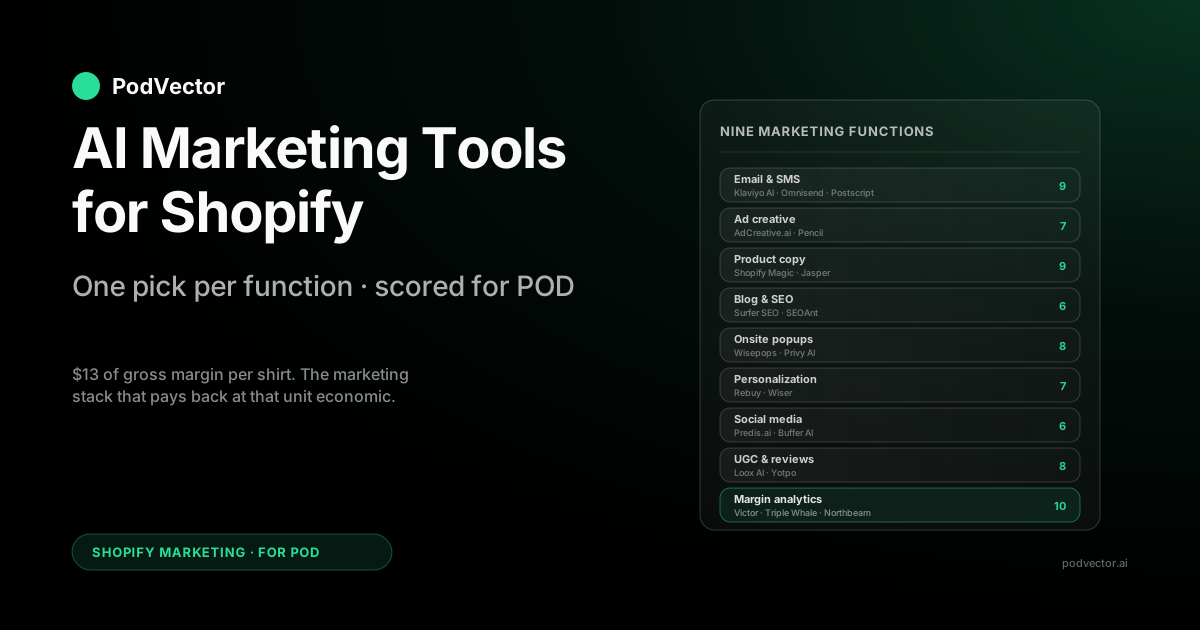
Quick Answer: The AI marketing tools for Shopify that survive a POD operator's margin filter in 2026, one pick per function: Klaviyo AI (or Omnisend on a small list) for email and SMS, Zeely.ai or AdCreative.ai for ad creative, Shopify Magic for product copy, Surfer SEO for blog content, Wisepops for popups, Rebuy for personalization, Tidio for AI customer chat, Predis.ai for social, and Loox for reviews.
The one the generic roundups skip: Victor by PodVector AI — the AI-employee layer that reads your live Printify and Printful supplier cost and acts on it, reallocating ad spend toward the designs that clear margin, each move gated on your approval, so the rest of the stack pays back instead of bleeding.
The 2026 tools rank on two pitches: "profit-driven" and agentic (software that monitors performance and moves budget itself — Glowtify tops the App Store on it, and Shopify's Campaign Autopilot now runs ads natively) and stack consolidation (collapse 17–20 platforms to a handful). Both only pay back for POD if the budget being moved is gated on real supplier-cost margin, not generic revenue. For a Printify-supplied shirt with several dollars of supplier cost baked in, a high monthly subscription needs many extra units a month just to cover its own bill — so this guide picks one tool per function and tells you the revenue at which each starts paying back.
Why "Marketing Tools for Shopify" Need a POD Filter
Type the headline phrase into Google and you get three flavors of result: Shopify's own 15+ best AI marketing tools roundup, app-vendor blog posts ranking themselves first, and SEO listicles built around the App Store install counts. None of them filter by unit economics, because none of them are written for print-on-demand. They assume a brand with high gross margins and price every recommendation against that.
Print-on-demand inverts the math. A typical Printify-supplied tee has a meaningful supplier cost baked in before a single marketing dollar touches the unit. The per-unit gross after Shopify fees and shipping refunds is narrower than a generic DTC brand's, and every tool subscription has to clear payback against that narrower number.
A high-priced marketing tool — well within the "starting plan" range for several of the tools the SERP roundups push hardest — needs many incremental units just to cover its own bill. That's a different threshold than the brand-side reviewers benchmark against, and it's why this guide picks differently than the other twelve "AI marketing tools for Shopify" articles you've already skimmed.
The function map is the same as for any Shopify store: email and SMS lifecycle, paid ad creative, product copy, blog and SEO content, onsite personalization, social media output, and analytics over the top. What changes for POD is which tools clear payback inside each function — and one extra category that none of the generic roundups include: margin-per-design analytics that read your actual Printify or Printful supplier cost and tell you which designs are worth marketing in the first place.
For the broader category map, the complete guide to AI tools for POD sellers is the pillar. The closely-related AI tools for ecommerce marketing comparison covers the same functions at the ecommerce-wide altitude; this guide drills specifically into the Shopify integration surface, and the AI apps for Shopify comparison ranks the App Store installs beyond the marketing stack. The tools cluster hub indexes every comparison in this series, and the AI analytics topic hub is where the margin-per-design question lives.
The Scorecard: One Pick Per Function
Scores out of 10 on POD-specific criteria — payback against a tight per-unit gross margin, Shopify integration depth (whether the install is one click or a developer hour), and whether the tool's output is usable at the per-design level rather than only at the per-store level. Starting cost is the all-in monthly including AI usage fees, not the headline plan price.
| Marketing function | Top pick for POD | Starting all-in cost | POD payback | Shopify install |
|---|---|---|---|---|
| Email & SMS | Klaviyo AI | Free → $45/mo | 9 | One-click |
| Ad creative | AdCreative.ai | $29/mo | 7 | External |
| Product photos | OnModel | Free → $19/mo | 8 | External |
| Product copy | Shopify Magic | Free | 9 | Native |
| Blog & SEO | Surfer SEO | $89/mo | 6 | External |
| Onsite popups | Wisepops | $49/mo | 8 | One-click |
| Personalization | Rebuy | $99/mo | 7 | One-click |
| Social media | Predis.ai | $32/mo | 6 | External |
| AI customer chat | Tidio | Free → $29/mo | 7 | One-click |
| UGC & reviews | Loox AI | $9.99/mo | 8 | One-click |
| Margin analytics | Victor by PodVector AI | Free trial | 10 | Native |
The "POD payback" score is the column the SERP roundups don't have. It's not a feature score — most of these tools are well-built. It's a payback score against the print-on-demand unit economic profile, which is the actual question every POD operator is asking when they evaluate marketing software.
How to Choose: The POD Buyer's Four-Point Checklist
Every generic Shopify roundup ends with a "how to choose" checklist — usually some version of "set a budget, read reviews, check the integration." Those are fine for a high-margin brand. They're the wrong filter for print-on-demand, where a tool that's a no-brainer for DTC can quietly run your per-unit gross into the ground.
Before you install anything, run it through these four questions. They're the same four that produced the scorecard above.
- Does it clear payback against your per-unit gross? Take the all-in monthly price (plan fee plus AI-usage overage) and divide by your actual per-unit gross. That's how many extra shirts the tool has to sell every month before it's free. If you can't see the function driving that many incremental units, skip it.
- Is the Shopify install one-click or a developer hour? Native and one-click apps read your order history and line-item variants out of the box. External tools that need a product feed or a pixel paste cost setup time you're paying for in operator hours — fine for a tool you'll lean on daily, wasteful for one you're only testing.
- Does the output work at the per-design level, not just per-store? POD stores live or die on which design gets the spend. A tool that optimizes your store as one average — one ROAS, one COGS field — hides the design that prints at a thin margin. The ones worth paying for let you segment, recommend, or report at the SKU and design-theme level.
- Does it read real supplier cost, or a COGS field you maintain by hand? This is the question the agentic, "profit-driven" 2026 tools dodge. Most read profit from a COGS number you type in per SKU — stale within a drop or two across a multi-supplier Printify and Printful catalog. The leverage is whether the tool pulls live supplier cost before it moves a dollar.
Most tools ace the first three and fail the fourth — which is exactly the gap Victor was built to close. Apply the checklist function by function and the stack picks itself: install where a function is bleeding revenue now, and only keep the ones whose monthly bill clears payback against your real margin. See also our guide on how to get contribution margin for a tighter definition of what "margin" means at the unit level for POD.
Email and SMS: Klaviyo AI vs Omnisend vs Postscript
Email and SMS lifecycle is the highest-payback marketing function for a POD store, full stop. The reason: the cost of an email send is functionally zero against your per-unit gross, the recipient list is one you already paid to acquire, and the AI layer in 2026 has gotten good enough at segmentation and timing that the lift over a generic broadcast is real. Every POD operator past modest monthly revenue should have something in this slot.
Klaviyo AI — the depth pick
Klaviyo's free tier covers 250 contacts and 500 sends, then scales to $45/month at 1,500 contacts and unlimited sends. The AI layer (Klaviyo AI, branded inside the platform) does three things that matter for POD: predicted lifetime value scoring at the contact level, AI-written subject lines and SMS copy with brand-voice training, and segment generation from natural-language prompts ("show me customers who bought a graphic tee but never a hoodie"). The Shopify integration is one-click and reads your full order history including line-item product variants, which is what the lifecycle flows segment on.
For POD specifically, the segmentation depth matters more than the copywriting. A typical POD store has dozens of design SKUs and a handful of base products (tee, hoodie, mug, poster) — the "abandoned cart for hoodie buyers who haven't seen the new drop" segment is where the incremental revenue comes from, and Klaviyo's segment builder is the deepest in the category. The full ranking against the broader email tools is in the best AI personalization tools comparison.
Omnisend — the small-store starting point
Omnisend's free tier covers 250 contacts and 500 emails plus 60 SMS credits, then scales to $16/month at 500 contacts. The AI layer (Smart Sending, AI subject line generator, product recommendations) is shallower than Klaviyo's but priced for a smaller store, and the Shopify integration is just as clean.
For POD operators at lower revenue who don't need Klaviyo's segmentation depth yet, Omnisend is the lower-friction start. The per-dollar email return in the channel is directionally consistent with what most POD operators see in the first 12 months of running an actual lifecycle program.
Postscript — the SMS-first specialist
Postscript ($25/month base + per-message fees) is the SMS-only version of the job. AI-written SMS replies, conversational flows for cart recovery, and a deep Shopify integration that reads order data live. Pick it as a complement to Klaviyo or Omnisend, not a replacement — SMS as a channel converts better than email per send but costs per message, and the right stack is usually email-led with SMS reserved for high-intent moments (cart abandonment, post-purchase upsell, Black Friday).
The cheaper SMS-first alternative the current roundups lead with is TxtCart ($29/month starting plan), which pairs AI conversational cart-recovery texts with a flat entry price instead of Postscript's per-message metering. For a lower-revenue POD store that wants SMS cart recovery without a usage bill that scales with send volume, it's the lower-risk way in; graduate to Postscript once SMS is a deliberate channel rather than a recovery bolt-on. The enterprise end of the SMS roundups still leads with Attentive, but its volume-priced contracts are built for high-LTV DTC subscriber bases — for a POD store with a tighter per-unit gross, the per-message economics rarely clear payback before Postscript already covers the same job, so treat Attentive as a graduate-when-you're-a-real-brand option, not a POD starting point.
What to install
Smaller stores: Omnisend free, upgrade as the contact list grows. Mid-range: Klaviyo AI. Higher revenue: layer Postscript in for SMS specifically. Never install both Klaviyo and Omnisend simultaneously — they fight over the same flow triggers and the duplicate sends will hurt deliverability.
Ad Creative: AdCreative.ai vs Pencil
Paid ads are the second-largest marketing line item for most POD stores, and ad-creative tools are the AI category most often misunderstood. The tool produces the static or video creative; it doesn't pick the audience or optimize the bid (Meta's algorithm does that). The payback question is whether the AI-generated creative converts well enough to justify the subscription against the alternative of a human designer or in-house Canva work. For the checkout side of that spend, see our guide on ecommerce checkout conversion rate optimization.
AdCreative.ai — the volume pick
AdCreative.ai ($29/month starting plan, $59/month for the small-team plan) generates static ad creatives in your brand colors and fonts at near-unlimited volume. For POD stores that test many new designs a month and need a Meta-ready ad for each, the volume math works at the lower-tier plan.
The Shopify integration is product-feed-based — you point it at your store, it pulls product images, and it generates ad variants. The output is good enough for testing creative but not always good enough for top-of-funnel scaled spend; treat it as the first round of creative that you replace with hand-tuned versions for the winners.
Zeely.ai — the budget video pick
Zeely.ai ($19/month starting plan) is the newest entrant the 2026 ad-creative roundups now rank first, and it earns the slot on price plus video: it generates short-form video ads and matching copy from your product feed at a price point below AdCreative.ai's. For a POD store that needs TikTok and Reels-shaped vertical video to launch a design — the format where graphic tees actually spread — it's the cheapest way to get a testable video unit without a designer. The same caveat applies as for every tool in this slot: the AI video is good enough to test, not to scale a winner. Below a meaningful revenue threshold it's the lowest-friction way to start running paid video at all; above it, you'll still hand the breakthrough creative to a human.
Pencil — the brand-consistency pick
Pencil ($119/month starting plan, scaling to $299 and $999 tiers) is the higher-end alternative, with deeper brand-voice training and the ability to generate video creative as well as static. For POD operators at higher revenue who are running scaled Meta spend and need consistent brand output across hundreds of variants, the price difference pays back. Below that revenue threshold, AdCreative.ai is the better fit.
OnModel — the AI product-photography pick
The 2026 roundups now rank AI product photography alongside ad creative, and it's the one new category that's almost purpose-built for POD. OnModel (free tier, then $19/month) turns a flat supplier mockup into an on-model photo — different models, body types, and settings — without a photoshoot.
That's the visible gap between a POD listing and a real brand's: supplier mockups all look the same, and buyers convert on photos that look shot, not rendered. At $19/month it clears payback at just a couple of extra shirts — run your proven designs through it, not the whole catalog. The AI design tools for print-on-demand comparison covers the rest of the design-side stack.
The honest caveat about ad creative AI
Both tools are good at producing technically-clean ad units. Neither produces creative that reliably outperforms a human designer who knows the POD niche — graphic-tee buyers respond to design-led creative more than product-led creative, and the AI tools default to the latter.
Use them for volume and speed, not for the breakthrough creative that scales a winning design. The breakthrough still comes from a human looking at the design and writing copy that respects what the niche audience actually responds to. To avoid burning budget on repetitive creative, see our guide on how to avoid ad fatigue and the related explainer on what is ad frequency.
Product Copy: Shopify Magic vs Jasper
Product description copy is the AI category where the free option is genuinely competitive with paid alternatives. Shopify Magic is built into the admin, costs nothing, and produces draft-quality product descriptions that need light editing before publish. For POD stores with hundreds of design SKUs across a few base products, that's most of what you need.
Shopify Magic — the free baseline
Shopify Magic ships free with every Shopify plan in 2026. Inside the admin product editor, the "Generate text" button produces a product description from the title, product type, and tags.
For POD sellers it works well on the base-product level (a generic "soft cotton unisex tee" description works across most graphic-tee SKUs) and saves the operator from rewriting variations of the same paragraph for every new design. The bulk-edit version (introduced in 2025) lets you generate descriptions for multiple products at once, which is the version that matters at POD catalog scale. For deeper automation of store-side changes, see our guide on Shopify Admin API store modifications and automation.
Jasper — the brand-voice pick
Jasper ($69/user/month starting plan) is the alternative for stores that need consistent brand voice across product copy, blog posts, ads, and email all at once. The Brand Voice feature trains on your existing content and applies the voice to every output.
For a single-operator POD store, Jasper is overkill — Shopify Magic plus a content-aware prompt template covers the same job at zero marginal cost. For a small team with a designer, a copywriter, and an email marketer who all need to sound like the same brand, Jasper earns its subscription.
What to install
Single-operator POD stores: Shopify Magic free, period. Past 2–3 people on the team writing customer-facing copy: Jasper. Don't pay for a separate general-purpose AI writing subscription on top of Jasper — the model overlap is significant and you'll pay twice for the same draft.
Blog and SEO: Surfer SEO vs SEOAnt
Blog content is a long-payback investment for any Shopify store, and the AI tooling in 2026 has gotten good enough that the question isn't "should we publish blog content" but "which AI tool keeps the blog factually clean and on-topic for the niche." For POD specifically, the blog payoff is usually niche-authority for the design themes you sell into (vintage-cars enthusiasts buy from sites that cover vintage-cars topics, not from sites that publish generic AI-spun ecommerce content).
Surfer SEO — the SERP-aware writer
Surfer SEO ($89/month starting plan) is a SERP-driven content optimization tool that generates and optimizes articles around a target keyword by analyzing the existing top 10 results. The AI Writer feature produces a full draft optimized for the SERP, then the Content Editor scores it against semantic completeness in real time.
For POD stores building niche-authority blog content (the only kind that converts) it's the best blend of AI speed and SERP discipline. Pair it with a human reviewer who knows the niche and checks for factual nonsense.
SEOAnt — the in-Shopify alternative
SEOAnt ($29.99/month starting plan) lives inside the Shopify App Store and combines a technical-SEO audit with an AI blog generator. It's lighter than Surfer on the SERP-analysis side but tighter on the Shopify integration — meta tags, image alts, structured data, and blog publishing all happen inside the Shopify admin.
For stores that want a single in-Shopify tool rather than a separate writing platform, it's the right pick. For stores serious about ranking, Surfer's SERP analysis is meaningfully deeper.
Onsite Popups and Personalization: Wisepops vs Privy AI vs Rebuy
Onsite optimization splits into two related categories: popups and forms (the lead-capture and exit-intent layer) and product personalization (the recommendation engine across product, cart, and post-purchase). Both have AI flavors in 2026, both pay back well for POD, and the right stack usually includes one tool from each.
Wisepops — the popup AI pick
Wisepops ($49/month starting plan) is a popup and onsite-message platform with a deep AI segmentation layer. The AI Targeting feature picks which message to show which visitor based on referral source, device, behavior, and inferred intent.
For POD stores, the highest-payback popup is the email-capture exit-intent on first visit, and Wisepops handles it cleanly. The Shopify integration is one-click.
The 2026 popup roundups now feature Alia as a newer entrant whose pitch is autonomous A/B testing — it continuously generates popup variants, shows each visitor the version it predicts will convert, and retires losers without you touching the test. For a single-operator POD store the appeal is real (popup optimization is exactly the kind of low-stakes loop worth handing to software), but the price clears payback only once your traffic is high enough for the test to reach statistical significance quickly. Under meaningful monthly visitor counts the autonomous testing has too little data to beat a hand-set Wisepops or Privy popup, so start cheaper and graduate to Alia when volume justifies it.
Privy AI — the cheaper alternative
Privy ($30/month starting plan) is a smaller-store version of the same job — popups, email capture, exit-intent — with an AI assistant for headline copy generation. For POD stores at lower revenue who need email capture but don't need Wisepops' targeting depth, Privy is the cleaner spend. Past that, Wisepops' segmentation matters.
Rebuy — the personalization engine
Rebuy ($99/month starting plan) is the on-store recommendation engine: AI-powered "frequently bought together," post-purchase upsells, and cart-drawer recommendations from one config. For POD, the rules layer matters — you can constrain recommendations by product tag so the engine prioritizes high-margin SKUs (tag your tees that print cheaply and bias the recommendation slot toward them, instead of letting Rebuy promote the high-cost hoodie that hurts margin). The cheaper alternative the App Store roundups rank alongside it is LimeSpot ($18/month starting plan), which does the same AI "frequently bought together" and cart-drawer recommendations at a lower entry price but with a shallower rules layer — for POD the tag-based margin biasing matters more than raw recommendation accuracy, so Rebuy earns the premium at higher revenue and LimeSpot covers the slot cleanly below it. The full breakdown of recommendation engines lives in the best AI personalization tools comparison.
Octane AI — the quiz-funnel alternative
Octane AI ($50/month starting plan) is the other personalization shape the current roundups feature: AI-built product quizzes that route a visitor to the right design or base product while capturing the email at the same time. For a POD store with a broad design catalog across one or two niches, a "find your design" quiz both segments the new subscriber and pushes them toward the SKU that fits — and you can weight the quiz outcomes toward the higher-margin prints. It's a complement to Rebuy, not a replacement: the quiz captures and routes at entry, the recommendation engine upsells at cart.
AI onsite search — Wizzy and Nosto
The newest category the 2026 roundups add is AI-powered onsite search and product discovery — Wizzy ($19/month starting plan) and Nosto's search layer replace Shopify's default keyword search with semantic matching that understands "funny cat shirt" even when your title says "feline humor tee." For a POD catalog with hundreds of loosely-tagged design SKUs, this is genuinely high-payback: a shopper who searches and finds nothing bounces, and POD titles are rarely keyword-clean. Install it once your catalog grows large enough that the default search starts returning empty results for real queries; below that, Shopify's built-in search is adequate and the spend doesn't clear payback.
Social Media and UGC: Predis.ai vs Loox AI
Social media for POD is mostly an organic-content problem (TikTok and Instagram are the channels where graphic-tee designs spread), and the AI tools in this category produce post drafts, schedule them, and suggest hashtags. The category is shallower than the others on this list — most of these tools save time more than they generate revenue — but the time saved is real, and at the lower price tiers the math works.
Predis.ai — the post-generation pick
Predis.ai ($32/month starting plan) generates social posts (image, caption, hashtags) from your Shopify product feed. For a POD store launching new designs weekly, it cuts the social-content workflow significantly.
The output isn't going to win design awards, but it's enough to keep the feed live and let the operator focus on the work that compounds. For a deeper look at AI in this slot, the general AI tools for ecommerce comparison covers adjacent options.
Loox AI — the UGC and review pick
Loox ($9.99/month starting plan) is a photo-review collection app with an AI layer for review summarization and reply drafting. For POD stores, the AI photo-review request flow that triggers post-fulfillment is the highest-payback feature — POD products live or die on social proof, and the photos are what convert hesitant buyers on the product page. The price point is low enough that every POD store past a modest order volume should have something in this slot, and Loox is the most-installed version.
AI Customer Chat: Tidio vs Gorgias vs Shopify Sidekick
AI customer chat is the marketing function the 2026 SERP roundups now push hardest — every current top result lists an AI support or conversational tool, and for good reason: the AI chat layer has crossed from scripted-FAQ deflection into genuine pre-purchase selling (answering sizing, shipping-time, and "does this design come on a hoodie" questions at the moment of intent). For POD, where the buyer's hesitation is usually a fit or print-quality question rather than a price objection, the conversion lift on the product page is the part that pays back. The slot-by-slot ranking beyond Shopify lives in the AI chat tools for ecommerce comparison, and the POD seller's guide to AI chat covers setup end to end.
Tidio — the POD-friendly starting point
Tidio (free tier, then $29/month for the Lyro AI plan) bundles live chat, an AI chatbot, and order-status automation into a one-click Shopify install. The Lyro AI layer answers customer questions from your store content and order data without a scripted flow, and the free tier covers enough conversations for a smaller store to get the pre-purchase lift before paying anything. For most POD operators this is the right slot to fill first.
Before paying for anything, note that Shopify Inbox — free on every Shopify plan and the native chat both 2026 top-result roundups now lead with — covers basic live chat plus AI-suggested replies and FAQ answers pulled from your store. It's thinner than Tidio's Lyro on autonomous pre-purchase selling, but it's the zero-cost baseline a brand-new POD store should turn on first and only outgrow once chat volume justifies Lyro AI.
Gorgias — the helpdesk-grade pick
Gorgias ($10/month base, scales with ticket volume) is the deeper helpdesk: AI-drafted replies, macros tied to Shopify order actions (refund, reprint, address change), and a unified inbox across email, chat, and social DMs. For POD stores at higher revenue where support volume is a real operator-time line item — print defects and shipping-delay tickets are the two that dominate POD inboxes — the AI auto-resolution earns its keep. Below that volume it's more helpdesk than a single operator needs.
AI phone agents — Ringly and the voice angle
The newest support category the 2026 roundups add is the AI phone agent — tools like Ringly.io that answer inbound support calls autonomously. For most POD stores this is a category to skip: graphic-tee buyers transact entirely over chat and email, and phone volume rarely justifies a high monthly line item against a tight per-unit gross. Revisit only if you sell a higher-AOV custom or B2B/bulk-order POD line where buyers actually call before ordering; for the standard catalog-tee store, the chat slot above is where the support budget belongs.
Shopify Sidekick — the native AI assistant
Sidekick is Shopify's own AI assistant, built into the admin and free on paid plans. It's an employee-facing assistant rather than a customer-facing chatbot — it answers "which products sold best last week" and drafts store edits — so it complements rather than replaces Tidio or Gorgias. Treat it as a built-in admin helper you already pay for, not the customer-chat slot itself.
What to install
Smaller stores: Tidio free, upgrade to Lyro AI when conversation volume grows. Higher revenue with real support volume: Gorgias. Use Sidekick alongside either as the admin-side assistant. As with email, don't run two customer-chat widgets at once — they collide on the product page and confuse the buyer.
Margin-Aware Analytics: Triple Whale vs Northbeam vs Victor
This is the marketing-stack category most generic Shopify roundups skip entirely, and it's the one that determines whether the rest of the stack pays back. Marketing analytics in 2026 means three things: campaign attribution (what drove the click), profit attribution (what drove the gross-margin dollar), and design-level analytics (which products inside your catalog actually deserve the marketing spend). For POD, the third is where the unique leverage lives.
The 2026 SERP shift toward "profit-driven" marketing apps is clear: Glowtify on the Shopify App Store describes itself as "a profit-driven AI marketing tool for Shopify merchants" that "identifies and prioritizes revenue opportunities," and Shopify's own Campaign Autopilot will spend your ad budget for you. The market is confirming the thesis this guide opened with: marketing software has to justify itself in margin, not impressions. The catch is that almost all of them still read profit from a COGS field you maintain by hand, which for a multi-supplier POD catalog is stale within a drop or two. The leverage isn't the profit label; it's whether the tool pulls your real Printify and Printful supplier cost live before it moves a dollar. For more on how to think about your unit profitability, see our guide on how to get contribution margin.
A second 2026 angle the attribution vendors push hard: first-party identity resolution. As third-party pixels degrade, standard Shopify tracking recognizes only a fraction of visitors, and platforms like LayerFive sell server-side identity matching to close that gap. The accuracy gain is real for high-LTV DTC brands; for POD it matters less than which design the recovered conversion was for, because routing the next ad dollar still depends on per-design supplier margin, not on attributing the last click more precisely.
Triple Whale — the DTC-style attribution pick
Triple Whale ($129/month starting plan, scales fast with revenue) is the most-cited marketing-analytics platform for Shopify in 2026. It pulls data from Meta, Google, TikTok, Klaviyo, and Shopify into a single dashboard and runs an AI-powered attribution model on top.
For DTC brands it's the category leader. For POD specifically, it has a known gap: COGS lives in Printify or Printful, not Shopify, and Triple Whale's profit calculations need you to manually maintain a COGS field per SKU — at hundreds of SKUs across dozens of design drops, that field gets stale fast.
Northbeam — the multi-touch enterprise pick
Northbeam (high starting price, aimed at large stores) is the multi-touch attribution platform for stores at significant scale. The AI attribution model is the best in the category. For POD stores the price point puts it past payback for almost everyone — at the smaller revenue scales most POD operators run, the marginal accuracy gain over Triple Whale doesn't clear the subscription difference.
Victor by PodVector AI — the POD-native pick
Victor is a POD-specific AI employee that connects to Shopify, Printify, and Printful and reads supplier cost live from the API rather than asking you to maintain a COGS field. Where the generic attribution tools stop at the dashboard, Victor acts: it identifies the designs printing under target margin, flags the design themes that scale spend without breaking margin, and can execute Shopify-side actions — like repricing a product to a target margin or organizing high-margin products into a collection — each move gated on your approval.
That's the difference for routing marketing spend toward the designs that actually make money: not a report you read on Monday, but an operator that surfaces the insight and executes the fix with your sign-off. Victor sits over the top of whichever attribution tool you run. The full architecture is covered in AI analytics platforms for Shopify. If you're also evaluating Shopify Capital to fund your marketing spend, see our guides on how to get Shopify Capital and whether Shopify Capital checks credit.
Three Marketing Stacks by MRR Stage
Under $10K MRR — the lean stack
Total: approximately $70/month. Omnisend free for email + SMS, Shopify Magic for product copy, Privy for popups, Tidio free for AI customer chat, Loox for reviews, Victor free trial for margin analytics. No paid ad-creative tool yet — at this revenue stage the operator is doing creative work in Canva by hand, and that's the right call.
$10K–$50K MRR — the operating stack
Total: approximately $310/month. Klaviyo AI for email + SMS, AdCreative.ai for paid ad creative, Shopify Magic for copy, Surfer SEO if blog content is part of the strategy, Wisepops for popups, Tidio Lyro AI for customer chat, Loox for reviews, Victor for margin analytics. This is the stack where the marketing tooling starts paying back materially against the marketing-spend line item. To understand the profitability math behind your product costs at this stage, see the Printify t-shirt cost and profit breakdown.
Past $50K MRR — the leveraged stack
Total: approximately $620/month. Everything in the operating stack plus Postscript for SMS specifically, Pencil for branded ad creative at scale, Rebuy for onsite personalization, Gorgias in place of Tidio for helpdesk-grade support, Triple Whale for cross-channel attribution. At this MRR scale the marketing-tools subscription rounds to noise against revenue, and the constraint shifts to operator attention rather than software cost.
Categories POD Operators Should Avoid Spending On
The SERP roundups push several categories that don't pay back for POD specifically. The honest list, in order of how often they show up:
Enterprise CDPs (Customer Data Platforms). Segment, mParticle, RudderStack are all real platforms for the brand-side enterprise. For POD, Shopify's customer object plus Klaviyo's segmentation already covers everything you'd actually use a CDP for, and the steep monthly prices don't clear payback against POD margins until you're well past the revenue ranges most POD operators operate in.
AI video generators for ad creative (premium tiers). Synthesia, HeyGen, Sora-API wrappers all produce technically-impressive video. For POD, where the design is the conversion driver, static ads of the actual product on a model still outperform AI-generated video in most operators' Meta accounts. Spend the budget on better static creative instead.
Conversational commerce video tools (Tolstoy, Firework). The category sells "shoppable video on the product page" and the payback math depends on lift in conversion rate × LTV. For POD's lower LTV profile, the lift rarely covers the subscription. Skip until you've measured a stable baseline conversion rate and the revenue math clearly supports it; for a broader view on conversion rate optimization, see our guide on ecommerce checkout conversion rate optimization.
AI dynamic pricing and competitor price trackers. Intelis and similar tools now rank in the 2026 App Store roundups on AI price-matching. For POD the category mostly doesn't apply: your price floor is supplier cost, your designs aren't comparison-shopped SKU-for-SKU, and matching prices against high-margin DTC brands is a race your tighter per-unit gross can't win.
One adjacent tool worth knowing instead: commission-priced chargeback recovery (Chargeflow charges a percentage of what it recovers, nothing otherwise), which is zero-risk by construction. The fraud side of that same problem is covered in the POD seller's guide to AI fraud detection.
Standalone AI loyalty platforms. Smile.io and Yotpo Loyalty are real platforms; the AI tier on top usually isn't. POD repeat-purchase frequency is lower than for replenishable consumables (a customer buys a graphic tee once a year, not every two weeks), and loyalty programs don't change that math. Skip until repeat-purchase data shows the LTV upside.
What about Glowtify?
Glowtify is the "profit-driven AI marketing" platform that now tops the Shopify App Store search for "AI marketing." According to the App Store listing, Glowtify is "a profit-driven AI marketing tool for Shopify merchants, offering an all-in-one platform that identifies and prioritizes revenue opportunities," with no prompts required to "generate content, plan 360° marketing campaigns, optimize SEO & GEO, manage social medias & more." It includes SEMrush-powered SEO fixes plus AI content for visibility, and tracks performance versus competitors with a scoring dashboard.
The consolidation pitch is real — users note it "does a great job keeping content for social, email, and paid campaigns in one place." For a generic Shopify brand, the all-in-one angle is compelling. For POD specifically, the same limitation applies that this guide flags for every "profit-driven" consolidator: profit-driven is only as good as the COGS number underneath it. Glowtify reads your Shopify data, but supplier cost from Printify or Printful doesn't flow into it automatically — you'd be maintaining a manual COGS field across a multi-SKU catalog, the same stale-data problem Triple Whale has. The tool is worth watching as it matures; for now, use it as the all-in-one content and SEO layer if you want to consolidate those functions, but keep a margin-aware operator like Victor over the top to ensure the content you're producing is pushing the right designs.
FAQs
What's the cheapest AI marketing tool stack for a Shopify POD store?
Omnisend free + Shopify Magic + Privy + Tidio free + Loox + Victor free trial covers email, SMS, product copy, popups, AI customer chat, reviews, and margin analytics for under approximately $70/month. That stack works to about $10K MRR before each tool individually starts hitting plan-tier limits.
Is Klaviyo or Omnisend better for POD on Shopify?
Omnisend is better for stores at lower revenue — lower starting price and tighter onboarding for smaller lists. Klaviyo is better past $10K MRR — the segmentation depth (segmenting by base-product type, design theme, and purchase recency at the same time) matters at POD catalog scale, and that's where Klaviyo pulls ahead.
Does Shopify Magic replace Jasper for product descriptions?
For a single-operator POD store, yes. Shopify Magic is free, it's built into the admin, and it produces drafts that are good enough with light editing. Jasper earns its $69/user/month when multiple people are writing customer-facing copy and brand consistency across product copy, ads, and email becomes a real problem.
Which AI ad-creative tool actually outperforms a human designer for POD?
Neither AdCreative.ai nor Pencil reliably outperforms a human designer for the breakthrough creative that scales a winning design. Both are good at the volume problem (many design tests a month, each needing a Meta-ready ad). Use them for testing, replace winners with hand-tuned creative.
Why isn't Triple Whale enough for POD profit analytics?
Triple Whale's COGS field is manually maintained per SKU. For a POD store with hundreds of design SKUs across multiple suppliers (Printify, Printful, Gelato), the field goes stale within weeks of every design drop. Victor reads supplier cost live from the Printify and Printful API, which keeps the margin calculation accurate without manual upkeep.
Is an AI chatbot worth it for a POD Shopify store?
Yes, once you're past a modest order volume. The payback for POD isn't ticket deflection — it's the pre-purchase conversion lift when the AI answers a sizing, print-quality, or "does this design come on a hoodie" question at the moment of intent. Tidio's free tier lets you measure that lift before paying; upgrade to Lyro AI when conversation volume grows, and move to Gorgias only when support-ticket volume becomes a real operator-time cost at higher revenue.
Do I need a separate AI tool for each marketing channel?
No — and the SERP roundups push this idea harder than the math supports. Most stores past $20K MRR run with three to five marketing-AI subscriptions total: one for email/SMS, one for ad creative, one for analytics, sometimes one for popups, sometimes one for blog content. The category-per-tool collapse from twelve subscriptions to four is usually the highest-ROI marketing operation a POD store can run.
The 2026 roundups now split on this question. One camp (Shopify's own and the consolidation-led platforms like Glowtify) tells you to collapse the whole stack into one suite; the other (the use-case-first guides) tells you to ignore consolidation and just solve your single biggest pain point first. For POD the resolution is the same either way: don't add a tool until the marketing function it covers is the constraint, and don't keep one whose monthly bill doesn't clear payback against your per-unit gross. Sequence the install by which function is bleeding revenue now, then consolidate the redundant ones once you have three or four running.
How does the agentic AI angle fit into this?
Most of the tools on this list are AI features layered into traditional SaaS. The employee capability — an AI that doesn't just generate the email but decides when to send it, to whom, and adjusts the next campaign based on the result — is where the category is heading, and 2026 made it native: Shopify's Spring 2026 Edition shipped "agentic storefronts" and a Campaign Autopilot that runs ad campaigns from the admin, and Shopify's OpenAI partnership is pushing agentic commerce into ChatGPT itself. The open question for POD isn't whether the agent can act — it's whether the action is gated on real supplier-cost margin or on generic revenue, because an autopilot that scales spend on a design printing at a thin margin loses money faster than a human would.
Victor answers profit questions and executes the actions those answers imply — with your approval (reprice the loss-making design to hit target margin, organize the high-margin SKUs into a collection the email blast can link to). The agentic AI for ecommerce piece covers the trajectory.
Your marketing tools generate the output. Victor decides where the spend goes.
Klaviyo, AdCreative.ai, and Surfer all generate marketing output. None of them know whether the design you're spending on prints at a healthy margin or a thin one.
Victor connects to Shopify, Printify, and Printful, reads supplier cost live, and acts on it — repricing products to hit target margin, organizing high-margin SKUs into collections, and flagging the designs worth scaling — each with your approval. Let Victor run your margin decisions.