
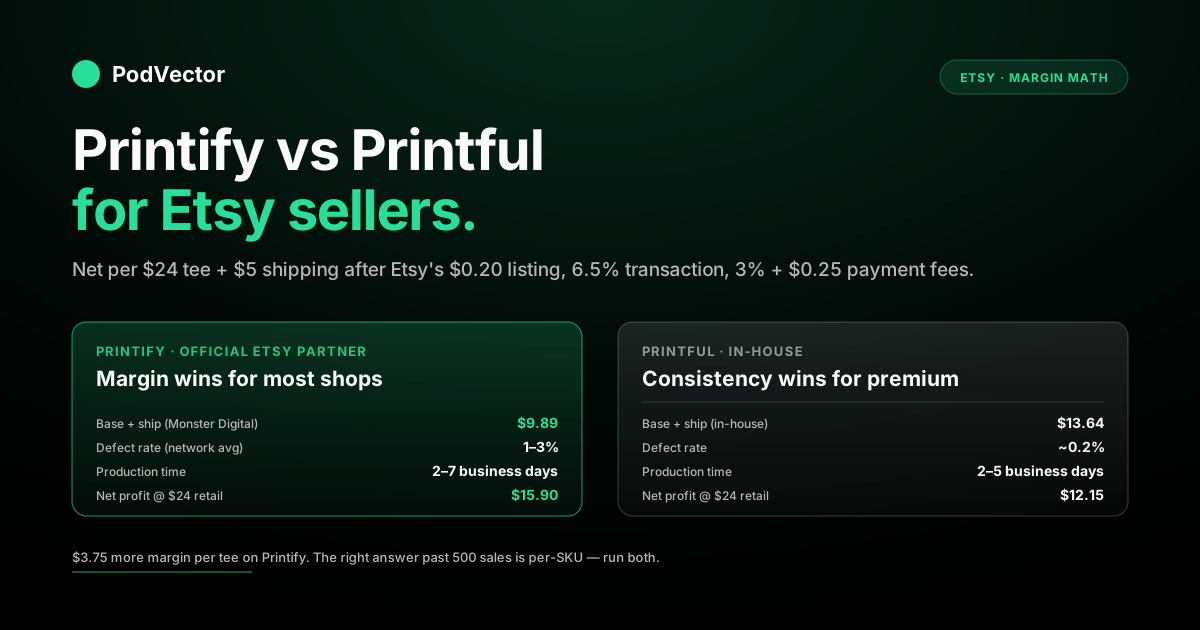
Quick Answer: Most Etsy sellers should start on Printify. Lower base costs (often 20–40% under Printful for the same blank), the official Printify–Etsy partnership, and zero monthly fee leave more margin after Etsy's 6.5% transaction fee, 3% + $0.25 payment processing, and $0.20 listing fee.
Move to Printful when you need the consistency to defend a high price point — branded packaging, in-house production, and a tighter defect rate that protects review velocity on Etsy's algorithm.
Below: the actual fee-adjusted margin math, where Printify's pricing edge breaks down, and why the most profitable Etsy POD shops in 2026 run both.
The Etsy reality: two right answers
If you search "Printify vs Printful for Etsy," Google serves you a dozen articles that pick a winner. Most of them are right — for one specific seller profile.
The honest answer is that Etsy compresses margin in a way that changes the calculus. You're inside a marketplace, paying Etsy's percentage fees on every sale, fighting for review velocity, and competing against shops that have already done the platform math.
That setting punishes the wrong supplier choice harder than running on Shopify or your own site does. Pick the supplier that doesn't fit your stage and you either eat the margin (Printful at $0 average order value) or eat the reviews (Printify with a high-defect-rate provider). Both kill an Etsy shop in different ways.
This guide walks through the trade-offs the way an Etsy seller would think about them — fee math, integration mechanics, shipping risk, and the decision points that matter at each stage of the shop's lifecycle. For the broader head-to-head, see our Printify vs Printful quality comparison and the full Printful comparison cluster.
Side-by-side for Etsy sellers
Before the deep dive, here's the snapshot. The three columns Etsy sellers care about most:
| Factor | Printify | Printful |
|---|---|---|
| Base cost on a Bella+Canvas 3001 tee | ~$4.50–$6.00 (varies by provider) | ~$8.95 |
| Etsy integration | Official Etsy partner, in-app badge | Long-running native integration |
| Average fulfillment time | 2–7 business days (varies by provider) | 2–5 business days (in-house) |
| Defect rate (industry-reported) | ~1–3% across the network | ~0.2% (in-house production) |
| Branded packaging on Etsy orders | Limited; depends on provider | Pack-ins and branded inserts available |
| Monthly fee to access best pricing | $0 free / $29 Premium (20% off products) | $0 free / $24.99 Growth (up to 33% off, waived above $12K/yr in sales) |
| Buyer personalization at checkout | Not natively supported | Yes — buyers add custom text/images on eligible products |
| Mockups for Etsy listing photos | Solid generator; fewer scenes | 2,550+ mockup scenes |
| Catalog size | 900+ products across providers | ~340 in-house products |
Numbers move quarter to quarter, but the shape doesn't. Printify trades consistency for cost. Printful trades cost for consistency. The Etsy lens is whether your shop's stage rewards margin or rewards reliability.
Pricing on Etsy: where Printify's edge shows up
Etsy's fee structure stacks against your margin in three places. Run the math once and the supplier difference becomes obvious.
Etsy's fee stack on a $24 tee
| Fee | On a $24 tee + $5 shipping |
|---|---|
| Listing fee | $0.20 |
| Transaction fee (6.5% of item + shipping) | $1.89 |
| Payment processing (3% + $0.25 in US) | $1.12 |
| Total Etsy fees | $3.21 |
Of $29 collected, Etsy takes $3.21 before the supplier ships. That's the fixed overhead. What's left depends on which supplier prints the tee.
Printify margin math
Printify provider Monster Digital prints a Bella+Canvas 3001 at roughly $5.20 base + $4.69 US shipping. Total supplier cost: $9.89. After Etsy fees and the supplier, you keep $15.90 on the $24 sale.
Printify Premium ($29/mo) cuts the base cost about 20%, dropping it to ~$4.16. That puts your supplier total at $8.85 and your margin at $16.94. The Premium plan pays for itself at roughly 28 orders/month at this price point.
Printful margin math
Printful prints the same Bella+Canvas 3001 in-house at roughly $8.95 base + $4.69 US shipping. Total supplier cost: $13.64. After Etsy fees and the supplier, you keep $12.15 on the $24 sale.
That's a $3.75 per-shirt gap in Printify's favor at the same retail price. On 100 monthly orders that's $375 — enough to fund a Printify Premium subscription twelve times over.
What the gap doesn't capture
Lower base cost isn't free. Printify's $3.75 advantage assumes the order ships clean. Factor in a 1–3% defect rate that produces refund tickets, replacement shipments, and 1-star Etsy reviews, and the spread shrinks for sellers who can't filter providers carefully.
The arbitrage is clean if you're willing to do the provider-vetting work upfront. It's not clean if you treat Printify like a single supplier and pick whichever provider has the cheapest base. For deeper pricing math across the platforms, see our Printify vs Printful quality breakdown.
Quality on Etsy: where Printful earns the premium
Etsy buyers leave reviews. The algorithm reads them. A shop with 4.9 stars across 200 reviews ranks higher in search and gets more conversions than one with 4.6 stars across 500 reviews.
Defect rate maps directly to that math. Printful's in-house production runs around 0.2% defective orders per industry reporting. Printify's network averages higher — somewhere in the 1–3% range, with wide variance by provider.
On 1,000 orders that's the difference between 2 problem orders and 30. Each problem order on Etsy is one of three things: a refund (margin loss), a replacement (margin loss + shipping cost), or a 1-star review (algorithm hit that compresses future revenue). Most are some combination.
The compounding effect is the part that gets missed. Etsy weights review velocity, so a 1-star review three months in costs more than a 1-star review three years in. New shops carry the most risk; established shops with 1,000+ reviews can absorb a few defects without ranking impact.
Printful's premium pricing is functionally an insurance policy on review velocity. For shops priced under $20 it's hard to justify; for shops priced over $35 the math flips.
The Printify–Etsy partnership: what it actually changes
Printify is one of two POD platforms with an official Etsy partnership badge inside Etsy's seller tools. Printful runs a long-standing native integration but doesn't carry the same in-app placement.
What changes day to day:
- Discovery. New Etsy sellers see Printify recommended in Etsy's onboarding flow. That alone has driven heavy adoption among first-time POD shops.
- OAuth handling. The partnership flow is one-click and rarely breaks. Printful's OAuth works but is slightly older — connection drops happen, usually requiring a manual re-link.
- Listing push. Both platforms push listings to Etsy. Printify's transferred tag set tends to be sparser than Printful's, so plan for 5–10 minutes of SEO cleanup per listing on Etsy after the import.
- Order routing. Both auto-import Etsy orders, route them to fulfillment, and update tracking. Functionally similar.
The partnership isn't a moat. It's a small adoption push and a slightly cleaner setup. For sellers who already have a workflow, neither side is meaningfully better than the other on the integration mechanics.
Shipping speed and the 1-star review risk
Etsy displays a delivery estimate to buyers before they purchase. If the actual delivery date slips past the estimate, the order is flagged as late, your shop's metrics take a hit, and the buyer is more likely to leave a poor review.
Printful runs in-house facilities in the US, Mexico, Latvia, and Japan. Production averages 2–5 business days, with a tight standard deviation. Once you set the Etsy shipping estimate based on Printful's stated turnaround, the variance is low enough to defend.
Printify's shipping speed is provider-dependent. SwiftPOD typically ships in 2–4 business days. Other providers in the network can take 5–8. If Printify routes your order to a slower provider during a peak season — which the system does automatically when your primary provider is at capacity — your Etsy delivery estimate gets blown.
The fix is not to ship blind. Lock providers per SKU, set Etsy estimates conservatively (8–10 business days for production + transit on Printify), and monitor late-shipment rate weekly. Sellers who do this on Printify match Printful's on-time rate. Sellers who don't get hit hardest in Q4.
Branding on Etsy: does it matter on a marketplace?
This is the section where the generic Printful vs Printify comparisons usually pick Printful, and where the Etsy answer is different.
On Shopify or your own site, branded packaging matters. The buyer arrived because of your brand and the unboxing reinforces the relationship.
On Etsy, the buyer didn't arrive because of your shop. They arrived because Etsy's search served them a result. The package shows up with Etsy-style branding (most buyers can't recall which shop sold them what), and the next purchase decision starts from Etsy's homepage, not your shop page.
Branded inserts and packaging still help — they boost repeat purchase rate and reduce return likelihood — but the lift is smaller than the Printful pricing assumes. For a shop where 90% of revenue is first-time Etsy buyers, branded packaging is worth less than the equivalent margin spent on better photography or paid Etsy ads.
Where it does matter on Etsy: shops that sell to a niche fandom (custom anime apparel, indie author merch, fan art communities) where the buyer is loyal to your shop's identity, not Etsy's. Those shops should pay the Printful premium. Most shops shouldn't.
Buyer personalization: the feature Etsy sellers miss
This is the gap most "Printify vs Printful" comparisons skip, and it's pure Etsy money. Etsy buyers love personalized products — names, dates, monograms, pet portraits.
Printful supports buyer personalization at checkout on eligible products (DTG apparel, embroidery, wall art). The buyer types their custom text or uploads an image, and the order routes to production with that data attached — no manual back-and-forth in Etsy messages.
Printify has no native equivalent. To sell personalized items on Printify you collect the detail through an Etsy personalization field, then manually edit the design per order before fulfilling. That works at low volume and breaks at scale.
The Etsy lens: personalized listings command higher prices and convert better in Etsy search, where "custom" and "personalized" are high-intent queries. If personalization is your niche, Printful's automated flow can outweigh its higher base cost outright — the margin math flips when the retail price carries a $10–$15 personalization premium.
One more Etsy-specific edge for both: mockups. Etsy listing photos drive click-through in search, and Printful's larger mockup library (2,550+ scenes) gives you more lifestyle shots without a photoshoot. Printify's generator is solid but thinner — plan to supplement with your own photos for hero images either way.
International Etsy buyers: customs, VAT, and routing
If you sell to buyers outside the US, the supplier choice changes again. Cross-border shipping adds transit time, customs delays, and VAT exposure — all of which feed Etsy's late-delivery flag and review risk.
Printful runs in-house facilities in the US, Mexico, Latvia, Canada, and Japan, and routes EU orders to its European facility to keep them inside the customs union. That cuts transit time and avoids surprise import fees for EU buyers.
Printify's network includes European and UK providers (e.g., Drive Fulfillment) that print locally for those regions, often at a lower base cost than Printful for the same blank. The catch is the same as always on Printify: you have to pick the right regional provider per SKU, or an order routes overseas and blows your delivery estimate.
For VAT, both platforms support the standard marketplace handling — Etsy collects and remits VAT on eligible orders, so your job is to set delivery estimates that survive customs. Set them conservatively for international SKUs (Printify especially) and lock a local provider per region so the order never crosses a border it doesn't have to. For a fuller international breakdown, see our Printify vs Printful vs Gelato comparison.
The hybrid approach most profitable shops use
The framing of "Printify vs Printful" assumes you have to pick one. The most profitable Etsy POD shops in 2026 don't pick.
The split looks something like this:
- Printify for high-volume, low-AOV products where margin per unit matters most — basic tees, mugs, simple posters. Pick the provider with the best base cost, defect history, and shipping speed for the SKU.
- Printful for premium products where the price point can absorb the higher base cost — embroidered hats, all-over-print joggers, anything with a complex finish that needs in-house calibration.
- Region-specific routing for international Etsy buyers. Printify's European providers (e.g., Drive Fulfillment) ship cheaper to EU buyers than Printful's Latvia facility for some categories. Printful's Japan facility ships cheaper to APAC.
The blocker most sellers hit is operational: running both means two integrations, two cost structures, two defect histories, two shipping windows to track. A small Etsy shop can manage this in a spreadsheet for the first 50 SKUs. Past that, the SKU-level decision math gets ugly fast.
For a deeper view of the profit playbook including hybrid sourcing, see how to make money with Printful — the complete POD profit playbook.
Decision framework by seller stage
Strip away the marketing comparisons and the question is just where you are in the shop's lifecycle.
Stage 1: First 30 days, fewer than 50 sales
Start on Printify. Free plan, lower base costs, official Etsy partnership for clean setup. Pick one or two providers (Monster Digital and SwiftPOD are common starting picks for tees) and don't worry about hybrid yet. The goal is product-market fit, not platform optimization.
Stage 2: 50–500 sales, finding the bestsellers
Stay on Printify. Lock providers per SKU. Add Printify Premium ($29/mo) once you're past 28 orders/month — the 20% discount covers it. For deeper analysis on whether premium tiers earn their fee, see our Printful Premium worth-it analysis.
Stage 3: 500+ sales, scaling bestsellers
Layer Printful in for premium SKUs. Move embroidery, all-over-print, and any product priced over $35 to Printful for consistency. Keep tees and basic items on Printify for margin. Run both integrations side by side.
Stage 4: Multi-shop or six-figure annual revenue
Hybrid is mandatory. Region-specific routing matters. Defect-rate tracking per provider becomes a daily task. The platform-vs-platform question is answered — the new question is how to model per-SKU margin across both networks. For Reddit-side seller debate on the same trade-offs, see our Printify vs Printful Reddit comparison.
FAQs
Is Printify or Printful better for Etsy beginners?
Printify, in most cases. Lower base costs, no monthly fee on the free plan, and an official Etsy partnership that simplifies the setup. Beginners benefit most from the lower-cost, lower-risk start before they've found their bestseller.
Does Printful have an Etsy integration?
Yes — a long-running native integration that auto-imports orders, routes to fulfillment, and updates tracking. Functionally similar to Printify's. The main difference is that Printify carries an official Etsy partner badge inside Etsy's seller tools, which Printful does not.
Which has the better margins for Etsy sellers?
Printify, on most products. The base cost gap (often 20–40% under Printful) compounds with Etsy's percentage-based fee structure. On a $24 tee, Printify nets roughly $3.75 more per sale than Printful at the same retail price.
Will Printify's quality variance hurt my Etsy reviews?
It can if you don't lock providers per SKU. Printify's network has a wider defect-rate range than Printful's in-house production. The fix is to test 2–3 providers per SKU, pick the best one based on your sample order results, and monitor reviews closely. Sellers who do this match Printful's review profile.
Should I use both Printify and Printful for my Etsy shop?
Once you're past about 500 sales, yes. Use Printify for high-volume, low-AOV products where margin matters. Use Printful for premium products where consistency and packaging earn the higher price point. Most six-figure Etsy POD shops run both.
Is Printify Premium worth it for Etsy sellers?
Yes, once you cross roughly 28 orders per month. The 20% base-cost discount covers the $29 monthly fee at that volume. Below that, the free plan is fine — you'll just leave a small amount of margin on the table.
How do shipping times compare on Etsy?
Printful's in-house production runs 2–5 business days with low variance. Printify ranges 2–8 business days depending on which provider fulfills the order. Set Etsy delivery estimates conservatively on Printify (8–10 business days for production + transit) to avoid late-shipment penalties.
Can I sell personalized products on Printify or Printful through Etsy?
Printful supports buyer personalization at checkout on eligible products — the buyer adds custom text or an image and it routes straight to production. Printify has no native equivalent, so you collect the detail through Etsy's personalization field and edit each design manually before fulfilling. If "custom" listings are your niche, Printful's automated flow often justifies its higher base cost.
Which is better for international Etsy buyers?
Printful routes EU orders to its European facility to avoid customs delays and surprise import fees, with in-house sites in the US, Mexico, Latvia, Canada, and Japan. Printify can be cheaper if you lock a local regional provider per SKU, but a misrouted order ships overseas and blows your delivery estimate. Set international estimates conservatively and keep production in-region.
Does Printful's branded packaging matter on Etsy?
Less than the marketing implies. Etsy buyers see Etsy's branding more than your shop's, and most return to Etsy rather than your shop page for repeat purchases. Branded packaging matters for niche-loyal shops; for general categories, the margin is better spent elsewhere.
For more comparison reading, see all Printful articles or browse the full PodVector AI blog. Outside reading: Ryan Hogue — Printful vs Printify for Etsy covers the same trade-offs from a working seller's lens.
Let Victor run the supplier decision, not just answer it
"Printify vs Printful for Etsy" is the easy question. The hard part is acting on it — per SKU, per region, per season, every week.
Victor is PodVector's AI employee. He connects to your Shopify catalog and your Printify or Printful ops, spots the SKUs bleeding margin to the wrong supplier, and reroutes them — pausing the loser, switching the provider, updating the listing. You approve each move before it ships.
Hand off the supplier grind to an employee that actually pulls the levers.
Try Victor free