
Quick Answer: Printful's embroidery is the cleanest you'll get on a print-on-demand platform in 2026 — dense stitching, accurate color matching, and a digitization team that flags files before they ruin a hat.
The trade-off is cost. Embroidery base prices sit roughly $3–$8 above DTG on the same garment, and the free first-design digitization only goes so far before stitch-count surcharges kick in.
Best fit: brand-led stores selling premium hats, polos, beanies, and jackets at $32+ retail. Worst fit: high-volume sellers running 50-design tests where the per-unit cost will eat margin before you learn anything.
2026 Verdict at a Glance
Printful's embroidery is the reason brand-led POD stores keep paying the premium. Stitching is dense, colors stay true after multiple washes, and the digitization team will email you before they ruin a $14 dad hat with a file that was never going to embroider clean.
Where it gets harder is the math. A medium-detail logo on a dad hat lands around $18–$22 in total cost before shipping. Sell that at $32 retail with free shipping and you're looking at $6–$10 gross — which can vanish under ad spend faster than DTG margins do.
For 2026, the honest read is this. If your brand sells the perception of a real apparel label — hats, polos, jackets, beanies, weighted bags — Printful's embroidery still has no real peer in POD. If you're testing designs at $19.99, embroidery isn't where you start.
What Printful Embroidery Actually Is
Printful runs embroidery in-house at its US, EU, and Latin America facilities — the same buildings that handle DTG and all-over print. Orders aren't sent to a third-party network. The embroidery machines, digitizers, and quality control are all under one operation.
That matters more than it sounds. Embroidery is the POD category where supplier inconsistency hurts most. A logo that stitched cleanly last month at one shop can come back muddy from another shop two weeks later. Network providers can't guarantee the same machine every time. Printful can.
The process from your side is short. You upload a vector file (or a clean PNG with simple shapes), Printful's digitizing software converts it to a stitch file, you preview it on a mockup, and the order ships once a customer buys. First digitization on most files is free.
Embroidery Quality and Stitch Detail
This is where Printful earns the price difference. Stitch density is high enough that letters don't show garment underneath, color matching against Madeira thread codes is accurate, and there's minimal puckering on dense fills.
Small text — anything under 6mm tall — is where most POD embroidery falls apart. Printful's threshold for what they'll attempt is realistic. The digitization team will email you and ask to simplify a file rather than stitch out a blurry mess and ship it. That's an underrated form of quality control.
3D puff embroidery is supported on a subset of caps and beanies. It looks great on bold block letters and clean shapes, and terrible on anything fine. Printful flags this clearly during the design process, but it's worth knowing before you upload a script logo and expect it to puff.
Wash durability holds up. Reports from sellers consistently show embroidered designs surviving 30+ wash cycles without thread breakage or color fade. The garment usually wears out before the stitching does.
For a broader read on Printful's overall print quality across categories, see our Printful quality review.
The Embroidery Catalog
Roughly 60 of Printful's 400 catalog items support embroidery in 2026. The active categories are:
- Hats: dad hats, snapbacks, trucker hats, dad-hat 6-panel, foam trucker, beanies, knit beanies, bucket hats
- Polos and golf shirts: men's and women's piqué polo, performance polo
- Outerwear: embroidered zip-up hoodies, crewneck sweatshirts, work jackets, fleece quarter-zips
- Bags: tote bags, weighted gym bags, drawstring bags, fanny packs
- Aprons and headwear accessories
The catalog skews toward items where embroidery is the expected decoration method — hats and polos especially. T-shirts can be embroidered but rarely should be. The thread weight pulls the fabric, and most customers don't expect embroidery on a tee.
Maximum stitch count varies by garment. Most caps cap (no pun intended) around 12,000 stitches per location. Polos and jackets go higher — typically 15,000–20,000 per location depending on item.
For a deeper look at the apparel itself, our Printful home and living review covers the non-apparel side, and the custom home decor review walks through the printed (non-embroidered) accessories.
Pricing, Digitization Fees, and Surcharges
This is the section most reviews handwave. Let's actually price out an embroidered hat.
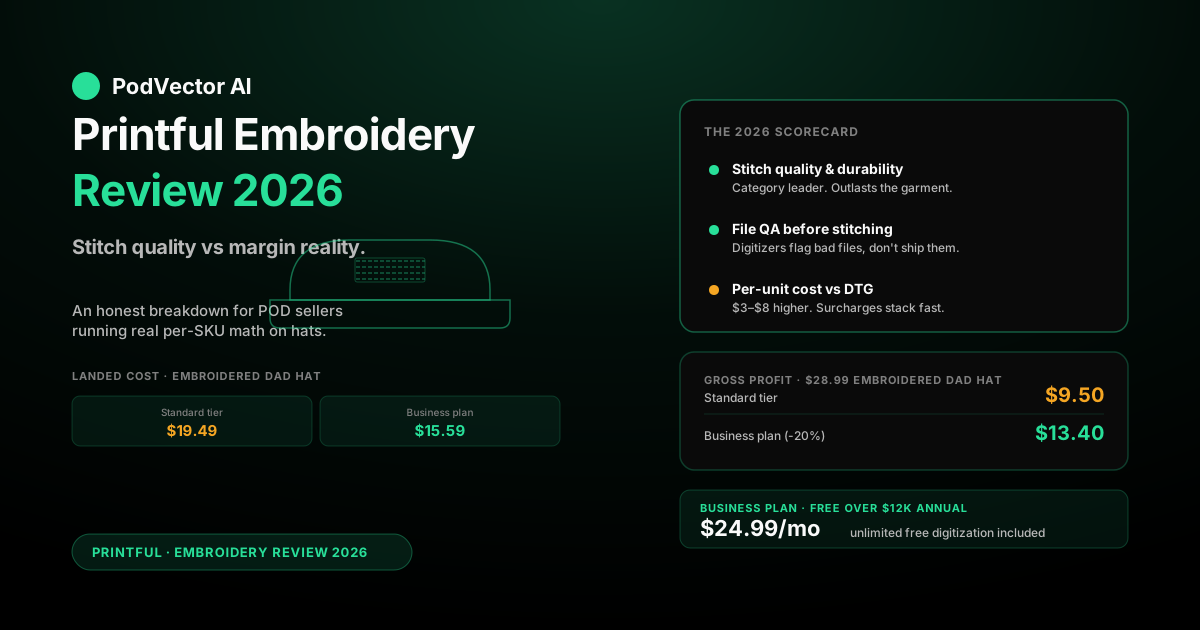
A classic embroidered dad hat in 2026 has a base cost around $14.50 with one embroidery location at standard stitch count. US shipping for the first hat runs $4.99. Landed cost: roughly $19.49 before any other fees.
Sell that hat at $28.99 with free shipping, and your gross profit is around $9.50. Sell it at $34.99, and you're at $15.50 gross. Both are workable, but only one absorbs $5–$7 of ad spend without going underwater.
The variables that move the number:
- Digitization fee: First-time digitization on most files is free. Edits to existing files are also free. Net-new files past your first usually run $1.50–$3 per file depending on complexity.
- Stitch count surcharges: Standard pricing covers up to a per-garment stitch limit (around 8,000 stitches on most caps). Going over adds roughly $0.50–$1.50 per additional 1,000 stitches.
- Second embroidery location: Side-of-cap or back-of-cap stitching adds typically $3–$5 per garment, plus its own stitch count.
- 3D puff upcharge: Adds $2–$3 versus flat embroidery on supported caps.
- Business membership ($24.99/month, free over $12K annual sales): Cuts product costs by up to 20% and includes free digitization across all files.
Real example. A logo at 11,000 stitches on a dad hat front, with side-of-cap initials at 2,500 stitches, on the standard tier:
- Base hat: $14.50
- Extra stitches on front (3,000 over standard): ~$1.50
- Second location: ~$4.00
- Shipping (first US item): $4.99
- Total landed: ~$24.99
To clear a $7 gross at that cost, you're retailing at $32 minimum. The Business plan brings the base down by roughly 20% and absorbs the digitization fees — most sellers who treat embroidery as core inventory consider it mandatory once they're past the testing phase.
The full cost picture across Printful's catalog is in our Printful company review.
Fulfillment and Turnaround
Embroidery production runs 3–6 business days in 2026, which is a day or two longer than DTG for the same garment. The extra time is the stitch run itself plus the QC pass on the finished item.
Shipping is unchanged from the rest of the Printful catalog. US domestic is 3–4 business days from when the order leaves the facility. EU delivery from Latvia or Spain is 4–6 days. Asia-Pacific from Japan is under a week for most destinations.
Total door-to-door on a domestic US embroidered hat order is typically 8–12 days. That's the number to put on your product page, with a comfort buffer.
One operational detail that catches new sellers: embroidery orders with custom files don't auto-route as flexibly as DTG. If a hat is out of stock at the closest facility, it doesn't always reroute to the next-closest the way a t-shirt does. Expect occasional delays during seasonal demand spikes.
Design Files, Hooping Areas, and What Won't Embroider
The single biggest mistake new sellers make is uploading a design that was built for screen print or DTG and expecting it to embroider clean. It won't.
Embroidery rules that aren't optional:
- No gradients. Thread is solid color. Period.
- No fine outlines under 1mm. They'll pull or skip.
- Limit color count. Each color change is a thread change. Stay under 6 colors per design or expect upcharges and stitch quality issues.
- Bold shapes over fine detail. A logo that reads well at 1 inch tall is what to design for, even if you're stitching it at 3 inches.
- Text minimum 6mm tall. Smaller and letters lose definition.
Hooping areas vary by garment. Dad hat front is typically 2.25" tall x 4.5" wide. Polo left chest is around 4" x 4". Back of a jacket goes much larger — 10" x 12" is common — but stitch count surcharges scale with it.
Printful's mockup generator previews the embroidery on the garment but doesn't preview stitch quality. The actual digitization preview comes from the digitizing team after you submit. If your file has issues, they'll email before stitching.
Pros and Cons
Pros
- Best-in-class embroidery consistency across regions and across orders
- Digitization team will flag bad files before stitching, not after
- Wash durability is excellent — most stitching outlasts the garment
- 3D puff supported on a real subset of caps
- Free first-file digitization (and unlimited free digitization on Business plan)
- Catalog covers all the categories where embroidery actually sells (hats, polos, outerwear, bags)
- Predictable shipping, integrated with every major ecommerce platform
Cons
- Per-unit cost is $3–$8 higher than DTG on equivalent garments
- Stitch count surcharges add up fast on detailed logos
- Second embroidery locations are expensive
- Turnaround is 1–2 days slower than DTG
- Design rules are strict — fine-detail or gradient designs need rework
- No live preview of actual stitch quality before submitting
Who Printful Embroidery Is Best For
Embroidery makes sense when the perception of a real apparel brand is part of what you're selling.
Strong fit: Brand-led stores selling embroidered hats, polos, and jackets at $32+ retail. Creator brands where the logo on a hat is the product. Agencies producing branded merch for clients. Sports, outdoor, and lifestyle apparel where embroidery is the expected decoration.
Weak fit: Stores testing many designs at low volume. The base cost on embroidered items eats margin too quickly to test efficiently. Run DTG tees for the first 10 designs, then graduate the winners to embroidered hats.
Bad fit: Price-sensitive marketplace sellers competing on $19.99 listings. The math doesn't work, and embroidery isn't where Etsy customers are most price-anchored anyway.
For the broader question of whether Printful or Printify is the right platform for your store, see our Printify vs Printful comparison and the deeper-dive Printify vs Printful differences breakdown.
Alternatives Worth Comparing
Printify. Embroidery quality varies by partner — some partners (notably Monster Digital and SwiftPOD) are excellent, others are not. If you find a good partner and stick to them, base costs are lower than Printful. If you don't audit which partner is fulfilling, quality bounces.
CustomCat. Strong on embroidered hats specifically with a competitive base cost. Catalog beyond hats is thinner.
Apliiq. Boutique-focused, with stronger custom branding options (sewn labels, custom packaging) but smaller catalog and higher base costs.
Bonfire. Built around campaign-style selling rather than always-on stores. Embroidery support is limited.
None of these beat Printful on consistency. A few beat Printful on per-unit cost if you're willing to manage supplier risk. For a working operator's first-person take on Printful's embroidery side specifically, the Theme404 embroidery review walks through the experience from upload to delivery.
The Question Most Reviews Skip: Is Embroidery Actually Profitable for Your Store?
Every embroidery review on the internet answers the same question: "Is Printful's embroidery good?" Yes. That question is settled.
The question that actually decides whether embroidery is the right call for your business is different. It's "Is the per-SKU margin on my embroidered hats — after the stitch count surcharges, the second-location upcharges, the ad spend, the refunds, the platform fees — actually higher than my DTG margin would be?"
That question has no generic answer. Two stores selling identical embroidered dad hats can have completely different net margins because of ad efficiency, return rates, design rework cycles, and which size-color combos actually move. The seller paying $9 per acquisition on a $34.99 hat is breaking even. The seller next door at $4 per acquisition on the same hat is running 30% margins.
The hard part is that POD stores almost never see this clearly. Shopify shows revenue. Printful shows COGS without the embroidery surcharge breakdown by SKU. Meta and Google ads sit in another tab. Etsy fees are on a separate dashboard. By the time you reconcile across four screens, the data is stale and the next product launch is already in progress.
This is the gap most reviews don't address. Picking a good embroidery supplier is the easy step. Knowing whether the embroidered SKUs you've built are actually outperforming your DTG SKUs after every cost is accounted for — that's the question that determines whether the upgrade was worth it.
Browse all our Printful reviews on the Printful reviews hub, or see everything we've covered on the supplier at the Printful topic page.
FAQs
Is Printful embroidery worth the extra cost?
For brand-led stores selling premium hats, polos, and outerwear at $32+ retail, yes. The quality consistency and digitization team support are worth the $3–$8 per-garment premium over DTG. For low-retail-price test stores, embroidery is harder to justify.
How much does Printful embroidery cost per item?
A standard embroidered dad hat base is around $14.50 in 2026, plus $4.99 US shipping for the first item. Landed cost on a single-location, standard-stitch-count order is roughly $19.49. Adding a second embroidery location adds $3–$5. Stitch count surcharges add roughly $0.50–$1.50 per additional 1,000 stitches over the standard threshold.
Does Printful charge for digitization?
First-time digitization on most files is free. Edits to existing files are free. Net-new files past your first usually run $1.50–$3 each. The Business membership ($24.99/month or free over $12K annual sales) covers unlimited free digitization.
How long does Printful embroidery take to ship?
Production runs 3–6 business days for embroidery, slightly longer than DTG. US shipping adds 3–4 days, EU 4–6 days, Asia-Pacific around a week. Total door-to-door on a US order is typically 8–12 days.
What items can Printful embroider?
Roughly 60 catalog items in 2026, focused on hats (dad hat, snapback, trucker, beanies, bucket), polos, zip-up hoodies, work jackets, fleece quarter-zips, tote bags, drawstring bags, fanny packs, and aprons. Embroidery on t-shirts is supported but rarely a good idea.
Can I do 3D puff embroidery with Printful?
Yes, on a subset of supported caps and beanies. Works well with bold block letters and clean shapes. Doesn't work with script fonts or fine detail. Printful flags compatibility during the design upload process.
What's the maximum stitch count for Printful embroidery?
Caps cap around 12,000 stitches per location. Polos and jackets go higher — 15,000–20,000 per location depending on item. Going over the standard threshold (around 8,000 on caps) triggers per-1,000-stitch surcharges.
Will Printful tell me if my embroidery file won't work?
Yes. The digitization team reviews files and will email if a design is too fine, too small, has too many colors, or otherwise won't stitch cleanly. They'd rather pause production than ship a bad order — which is one of the reasons quality stays consistent.
Embroidery quality is the easy part to evaluate. Whether your embroidered SKUs actually outperform your DTG SKUs is the hard part.
Shopify shows revenue. Printful shows COGS but not the stitch-count surcharge split. Meta sits in another tab. Etsy fees on yet another. By the time you reconcile, the next product launch is already running.
Victor is the AI employee that gives you the truth about your store — per-SKU margin, embroidery-vs-DTG ROI, the leaks costing you money — all from one place.
Try Victor free