
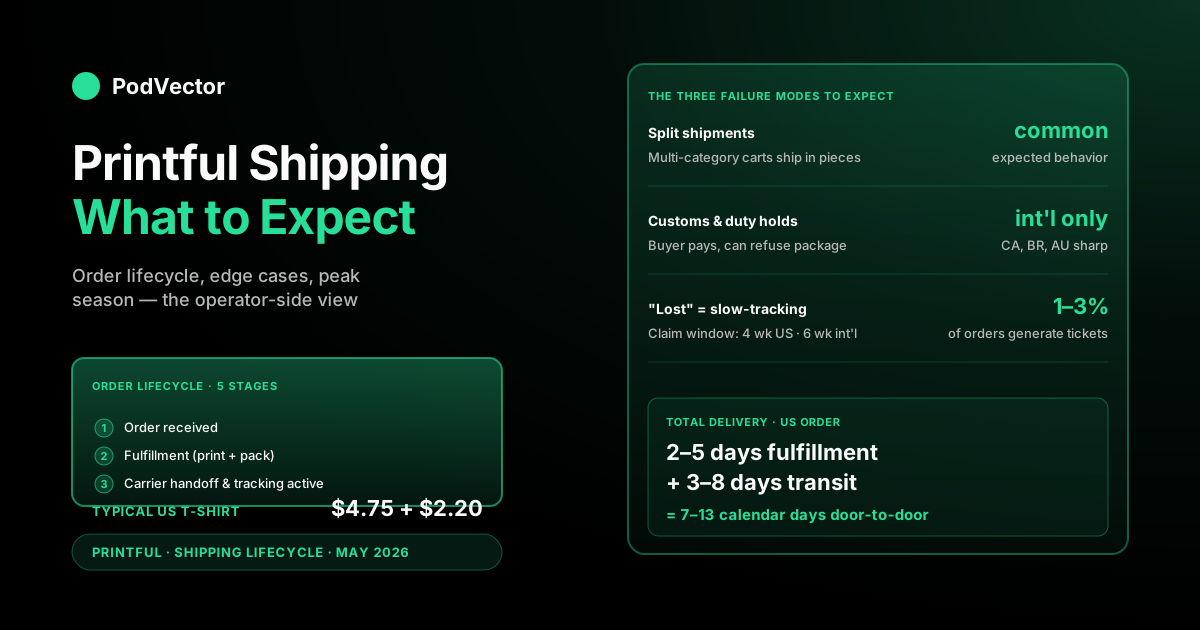
Quick Answer: A typical Printful order ships in two phases. Fulfillment (printing and packing) takes 2–5 business days for most apparel — according to Printful's official help center, the platform handles the vast majority of orders within that window. Carrier transit adds 3–8 days within the US and 5–20 days internationally. Total for a domestic US delivery: roughly 7–13 calendar days from order to doorstep.
Printful uses flat-rate shipping by product category and destination region. Rates shifted twice in 2026: a targeted accessories-only round on February 26, and a broader batch of first-item and additional-item changes that went live on June 4, 2026 (published with a downloadable old-vs-new list on Printful's shipping price updates page). Always verify current rates against the live Printful shipping calculator before publishing storefront prices — snapshots go stale.
What to expect in one sentence: most orders arrive on time and uneventfully. The ones that don't follow predictable failure modes — split shipments, customs holds, "lost" packages that are actually slow-tracking — and your customer-service workflow lives in those edge cases.
The Printful order lifecycle, end to end
Most "what to expect" questions come from sellers and customers not knowing where the order is in the process. Here's the whole arc.
Stage 1: Order received. The order hits Printful within minutes of your store sending it. If you're on Shopify, the handoff is automatic. Manual orders take a few extra minutes for you to push.
Stage 2: Fulfillment (2–5 business days). Printful routes the order to the nearest facility that prints the product. Apparel typically takes 2–5 business days, and according to getfuelpod.com, Printful handles the overwhelming majority of orders within five business days, with most completed in just 2–3 business days. Mugs and posters can be faster — often 1–3 days. The order sits in this stage until the print is done, the item is QC'd, and it's packed.
Stage 3: Carrier handoff. The package leaves the facility with a regional carrier — USPS, UPS, FedEx, DPD, Royal Mail, or one of the international equivalents depending on destination. Tracking activates here. The customer gets a shipped email with a tracking link.
Stage 4: Transit (3–20 business days). The package moves through the carrier network. Domestic US is usually 3–8 days. Intra-EU is 3–7. Crossing borders or going to remote regions stretches this to 10–20 days.
Stage 5: Delivery and support window. Most orders land cleanly. A small percentage generate a customer-service ticket: late delivery, address issue, damaged item, missing item. This is the window where your support workflow matters more than the rate card.
For the full Printful operator picture beyond shipping — pricing, products, integrations — see the Printful topic hub. The Printful shipping cluster hub indexes every shipping-specific guide in one place.
Shipping times by product and region
The two parts of total delivery time are fulfillment and transit. They add together. Don't quote one without the other.
Fulfillment averages by product type (per Printful's official help center):
- T-shirts and most apparel: 2–5 business days
- Embroidered apparel: 5–7 business days (embroidery is slower than print)
- Mugs, posters, and most accessories: 1–3 business days
- All-over-print clothing: 3–6 business days
- Custom-cut products (stickers, decals): 2–4 business days
For more on embroidered apparel specifically — the slowest fulfillment category — see our Printful embroidery shipping time breakdown.
Transit averages by region (after fulfillment, per Printful's published guidance):
- USA standard: 3–8 business days
- Canada standard: 5–10 business days
- Europe (intra-EU): 3–7 business days
- UK standard: 4–8 business days
- Australia / New Zealand: 7–14 business days
- Worldwide (everything else): 10–20 business days
A practical example: a US customer orders a hoodie on Monday. Fulfillment runs 3 days (printed by Thursday). Transit takes 5 days (arrives the following Tuesday). Total: 8 business days, or about 11 calendar days. Express shaves the transit leg to 1–3 days but does not touch fulfillment — according to Printful's official help center, fulfillment still runs 2–5 business days first, so the realistic floor is about 3 business days end to end even on Express. Our expedited shipping breakdown covers when the premium pays off.
Set your product page expectations against the upper end of each range. Customers forgive a 7-day quote that arrives in 5. They escalate a 5-day quote that arrives in 8.
What shipping actually costs you
Printful uses a flat-rate model. Every product category has a first-item rate and an additional-item rate per shipping region. The structure is consistent: a higher "first item" rate plus a lower "each additional" rate, per Printful's published rate table.
Representative US rates (single item / each additional) — verify these against the live Printful shipping page before setting storefront prices, as two rate batches updated in 2026:
- T-shirts (standard): ~$3.99 / first item (per Printful's shipping cost page, as reported by PodVector's shipping breakdown)
- Hoodies and sweatshirts: check live calculator — Cotton Heritage items were affected by the February 2026 increase
- Mugs (11 oz): check live calculator
- Phone cases: ~$4.99 first item (up from $4.59 after the February 26, 2026 increase, per bootstrappingecommerce.com)
- Stickers, postcards, patches (US): ~$4.29 first item (up from $3.99 after February 26, 2026, per bootstrappingecommerce.com)
- Knitted apparel (US): ~$11.49 first item (up from $10.49 after February 26, 2026, per bootstrappingecommerce.com)
- Backpacks: check live calculator
International rates are the steep ones — according to PodVector's global shipping breakdown, the same tee that ships for ~$3.99 US domestic can cost ~$11.99 to a Worldwide-region country. A hoodie that ships affordably within the US can run significantly more to a worldwide destination. Always use the live Printful shipping calculator for international quotes.
For deeper cost-side guides, see our breakdowns of Printful fulfillment fees and the mechanics of free shipping on orders over $500. For the live rate card and every region, Printful's official shipping page is the source of truth.
Two patterns to notice. Single-unit orders carry the highest shipping ratio — that first-item fee hits hardest on a one-shirt order. And the spread between product categories is wider than people expect: hoodies ship for substantially more than t-shirts to the same address.
2026 rate changes: what moved and what didn't
Two separate rate batches hit in 2026, and they affected different product sets. Getting this wrong means undercharging customers or failing to update storefront pricing.
February 26, 2026 — accessories-focused increase. According to bootstrappingecommerce.com, Printful raised shipping on select accessories: stickers, postcards, and patches (US) moved from $3.99 to $4.29; phone case shipping moved from $4.59 to $4.99; knitted product shipping moved from $10.49 to $11.49. Importantly, per bootstrappingecommerce.com, the most popular products in the catalog — Bella + Canvas, Gildan, mugs, posters — and standard apparel shipping rates were not affected.
June 4, 2026 — broader batch across first-item and additional-item rates. According to PodVector's shipping guide, Printful published a broader batch of first-item and additional-item price changes on June 4, 2026, with a downloadable old-vs-new list on Printful's shipping price updates page. This is the more recent batch and the one most likely to affect sellers who haven't audited their storefront pricing since early 2026.
International adjustments. Per bootstrappingecommerce.com, Printful also periodically adjusts international shipping rates — not always by the same amount across regions. In the February 2026 round, apparel shipping to Australia and New Zealand increased, and hat shipping to Canada increased. Japan saw increases too.
The practical action: treat Printful's shipping rate card as a living document you reconcile monthly against actual Printful invoices, not a set-and-forget table.
Why orders split into multiple packages
One of the most common "what's happening with my order" questions: the customer ordered one cart, but tracking shows two or three different shipments.
Printful splits orders when items in the same cart print at different facilities. A t-shirt and a mug usually print at different facilities, so they ship separately. Two t-shirts from the same facility ship together.
What the customer sees: two tracking numbers, two delivery dates, often a few days apart. Without context this looks like the order is broken. With context it's just how a multi-product print-on-demand cart works.
What to do about it. Two options:
- Set expectations on the product page. A one-line note ("orders with multiple items may ship in separate packages") prevents most of the tickets.
- Bundle items that print at the same facility. If you're building a curated bundle SKU, check the catalog to see which items co-locate. Two apparel pieces usually do.
The shipping math also splits: each shipping bucket gets its own "first item" charge. Our breakdown of multi-product carts is folded into the Printful drop-shipping review, which covers the full back-end fulfillment flow.
Tracking, notifications, and the customer experience
Printful generates tracking numbers when the package leaves the facility, not when the order is placed. There's a 2–5 day window after order where the only status is "in production."
This gap is where most customer anxiety lives. Customers expect a tracking number within hours, not days. You'll get the "where's my tracking?" email on day 2 if you don't preempt it.
How to handle it:
- Send a "production" email at order placement. Most Shopify themes have a "fulfillment in progress" template — use it. Set the expectation that tracking activates after printing.
- Auto-pass the tracking link. Printful pushes tracking into your store's order record. Most integrations forward it to the customer automatically; verify yours does. If not, customers ask you for it manually.
- Pick a carrier-agnostic tracking page. Apps like Shop, AfterShip, or Parcel Panel unify tracking across the multiple carriers Printful uses. Customers don't want to click into USPS one day and Royal Mail the next.
Carriers vary by region. USA orders use USPS, UPS, FedEx, or DHL depending on the destination ZIP and product. UK uses Royal Mail or DPD. EU uses DPD or local national carriers. The customer's experience differs by which carrier picked up the package — speed and tracking quality both vary.
When things go wrong: lost, damaged, refused
The vast majority of Printful orders arrive cleanly. The small percentage that don't fall into three buckets.
Lost in transit. Tracking stops updating. The package never arrives. Printful's policy: file a lost-order claim after the lost-package waiting window — typically 4 weeks past the expected delivery date for domestic, 6 weeks for international. They reprint and reship at no cost.
What this means for your support workflow: when a customer reports a missing order at day 14, you can't immediately get it reshipped. You acknowledge, set the waiting-period expectation, and check back in. Most "lost" packages arrive during the waiting window — slow-tracking, not truly lost.
Damaged on arrival. Customer opens the box and the print is smeared, the mug is cracked, the shirt has a hole. Photo evidence required. Printful reprints free of charge with a faster turnaround than a standard order.
The catch: damage claims need photos within a reasonable window — typically 30 days of delivery. Build that into your return policy and your customer-service script.
Refused or undeliverable. Customer rejects the package, gives a bad address, or moves before it arrives. Printful does not reship returned packages automatically. They notify you, and you decide whether to refund the customer (eating the shipping cost) or charge a reship.
This is the smallest bucket but the most expensive per incident. International refused orders for customs reasons can cost you the full shipping plus product cost. Setting an "additional duties may apply" notice on international product pages is the cheapest preventive measure.
International orders and the customs question
Printful ships to approximately 180 countries, organized into shipping regions. The experience of an international order differs from a domestic one in three places.
Transit time stretches. A worldwide order can take 3 weeks. The customer who bought on May 1 might not see the package until late May. Set that expectation at checkout, not in the shipping confirmation email.
Customs and duties. Printful does not pre-pay duties. The buyer is responsible for any import fees, VAT, or duties imposed by their country's customs authority. For low-value orders, duties are often waived under de minimis thresholds. For higher-value orders, the buyer can get hit with a bill at delivery — and refuse the package.
Some regions are sharper than others. Brazil and Canada both have aggressive duty assessment on low-value imports. Australia and the UK have post-Brexit and post-GST changes that catch sellers by surprise. The EU has VAT-at-checkout rules for orders under €150 (IOSS) that integrated Printful checkouts handle automatically — but only if your store is set up correctly.
Local fulfillment cuts both shipping cost and transit time. According to PodVector's global shipping breakdown, Printful's network of international facilities means local fulfillment cuts shipping cost roughly in half versus cross-ocean US fulfillment, and keeps standard delivery to most major markets inside 5–12 business days door-to-door, after a 2–5 day fulfillment window. If you have significant EU or UK volume, Printful routing to its European facilities rather than shipping from the US is a meaningful margin difference.
Returns are economically uglier. An international refused order costs you the original shipping with no automatic reship. Some sellers bake a "non-returnable to international destinations" clause into their store policy for this reason. Others build the refund cost into international pricing.
The practical rule: if you sell internationally, your retail prices need to be high enough that a refused-or-returned rate doesn't sink the channel.
Peak season: what to expect in Q4
October through December is the season where every shipping assumption in this article gets stretched.
Fulfillment stretches. Standard 2–5 day windows can become 7–10 days in mid-December. Embroidery and all-over-print can stretch even further. Printful publishes peak-season fulfillment notices in their dashboard each year — read them in October, not December.
Carrier capacity tightens. Even after the package leaves Printful, carriers run at peak load. USPS and UPS both publish "guaranteed by Christmas" cutoff dates. After those dates, even paying for express shipping doesn't guarantee delivery before December 25.
Lost-package rates rise. High volume, temporary workers, and weather combine to push a higher percentage of packages into slow-transit or lost-in-transit status. Your December support tickets will spike. Plan staffing accordingly.
What to do in advance. Publish a holiday cutoff date prominently — typically December 10 for standard US, December 15 for express. After that date, switch your product pages to "delivery in January" copy. The conversion hit on late-December orders is smaller than the support cost of every "didn't arrive by Christmas" ticket.
How to keep shipping from quietly eating your margin
Shipping is the line on a POD P&L that moves the most often without anyone noticing. Three drift patterns to watch.
Region mix shifts. Your store starts US-heavy. A creator-share or viral post brings a wave of European or worldwide orders. Worldwide shipping is substantially higher than US domestic — your retail price didn't move, and your gross margin dropped several points in a single week.
Carrier price changes. As 2026 has already shown — two separate rate batches from Printful before mid-year — shipping costs do not stay flat. According to bootstrappingecommerce.com, Printful periodically adjusts international shipping rates, and not always by the same amount across regions. If you priced your store a year ago, your shipping cost is almost certainly higher than what's in your spreadsheet.
Product mix drift. You launched at 80% t-shirts and 20% hoodies. Twelve months later it's 50/50. Hoodie shipping is higher than t-shirt shipping. Your blended per-order shipping cost moved without anyone updating the model.
Static spreadsheets don't catch these because the inputs change but nobody re-runs the math. The fix is the same as it is for any drifting line in a P&L: pull shipping cost per order into the same place as revenue and product cost, then watch the per-order margin over time.
Operators who track it catch the drift early. Operators who don't see it in the quarterly P&L review, three months after the damage is done.
If your store is on Shopify and you fulfill through Printful, Victor — PodVector's AI employee — reads your connected Shopify, Meta Ads, Google Ads, Printify, and Printful data into a live data warehouse, surfaces where shipping is eating margin, and proposes Shopify-side fixes (repricing, threshold adjustments, collection restructuring) for your approval. That kind of live per-order view is also useful context when you're diagnosing ad-spend efficiency: see our guides on why Facebook Ads ROAS doesn't match Shopify and why Google Ads ROAS doesn't match Shopify — shipping cost accuracy directly affects which orders look profitable in your ad platform reports.
FAQs
How long does Printful shipping take?
Fulfillment runs 2–5 business days for most apparel — according to Printful's official help center, the platform handles the overwhelming majority of orders within that window. Carrier transit adds 3–8 days for US domestic and 5–20 days for international. Total for a typical US t-shirt order: roughly 7–13 calendar days from order to delivery.
How much does Printful charge for shipping?
Flat rates by product category and destination region. Rates updated twice in 2026 — on February 26 and June 4 — so always verify current rates against the live Printful shipping calculator. Per bootstrappingecommerce.com, the February 2026 round raised phone cases to ~$4.99 and stickers/patches to ~$4.29 US domestic, while standard apparel rates were unchanged. The June 2026 batch was broader across first-item and additional-item rates.
What carriers does Printful use?
USPS, UPS, FedEx, and DHL in the US. Royal Mail and DPD in the UK. DPD and national carriers in the EU. Australia Post and DHL in Australia/NZ. The carrier is assigned per order based on destination, product, and current capacity — you don't pick it.
Why did my customer's order ship in two packages?
Items in the same cart that print at different facilities ship separately. A t-shirt and a mug almost always split. Two t-shirts from the same facility ship together. Each shipping bucket gets its own "first item" charge, so multi-category bundles cost more to ship than the per-item rate card suggests.
What happens if my customer's Printful order gets lost?
File a lost-order claim with Printful after the lost-package waiting window — typically 4 weeks past expected delivery for domestic and 6 weeks for international. Printful reprints and reships at no cost. Most "lost" packages arrive during the waiting window; truly lost ones are rare.
Does Printful pay customs and duties on international orders?
No. The buyer is responsible for any import fees, VAT, or duties imposed by their destination country. For low-value orders, duties are often waived under de minimis thresholds. For higher-value orders to countries like Canada, Brazil, or Australia, buyers can be hit with a duty bill at delivery and may refuse the package.
How do I track a Printful order?
Tracking activates when the package leaves the facility, not when the order is placed. There's a 2–5 day window after order placement where the only status is "in production." After that, Printful pushes tracking into your store record, and most integrations forward it to the customer automatically.
What is the difference between fulfillment time and shipping time on Printful?
Fulfillment is the print-and-pack stage at Printful's facility — 2–5 business days for most apparel, per Printful's official help center. Shipping (transit) is the carrier leg from facility to customer — 3–8 days US domestic, longer international. Express shipping cuts transit but not fulfillment.
Does Printful offer free shipping?
Not on standard customer-facing orders. Printful runs occasional free-shipping promotions for sellers around peak seasons, and many stores offer customer-facing free shipping above an order threshold by absorbing the cost. The mechanics are covered in our free shipping over $500 breakdown.
How do peak-season delays affect Printful shipping?
October–December fulfillment can stretch from the standard 2–5 day window to 7–10 days at peak. Carrier networks run at full capacity and miss delivery dates more often than usual. Publish a holiday cutoff date on your product pages — typically December 10 for standard US shipping — and switch to "January delivery" copy after that date.
Did Printful raise shipping rates in 2026?
Yes, twice. According to bootstrappingecommerce.com, a February 26, 2026 round raised rates on select accessories (stickers, phone cases, knitted apparel) while leaving standard apparel rates unchanged. Then per PodVector's shipping guide, a broader batch of first-item and additional-item changes went live June 4, 2026, with details published on Printful's shipping price updates page. If you set your storefront shipping prices before mid-2026, audit them now.
Shipping is the most volatile line in a POD P&L. Most sellers don't see it move.
The rate cards on Printful's website tell you what one order costs. They don't tell you that your blended per-order shipping crept up this month, or that a growing share of your orders are going to worldwide destinations where margins are tight, or that a carrier price change rolled in quietly — as happened twice already in 2026.
Victor connects to your Printful and Shopify accounts, pulls every itemized shipping line into a live data warehouse, and answers questions like "how is shipping eating my margin this week?" in plain English. When the answer points to a fix — repricing a SKU, raising a free-shipping threshold, restructuring a collection — Victor proposes the Shopify-side change and runs it with your approval.
Try Victor free