
What gross margin actually measures
Gross margin is the slice of every sales dollar left after you pay for the product itself. It answers one narrow question: is this thing worth making and selling before you account for ads, shipping, software, and salaries?
It is not the same as profit. A store can post a healthy gross margin and still lose money once marketing and overhead land. That gap is exactly where most "how to find gross margin" guides stop — and where this one keeps going.
Two quick terms so the rest makes sense:
- Gross profit is a dollar figure: Revenue − COGS.
- Gross margin is that same gap as a percentage of revenue.
Same math, two units. People say "margin" when they mean either, so always confirm whether someone wants dollars or a percent.
The gross margin formula
Here is the formula, spelled out:
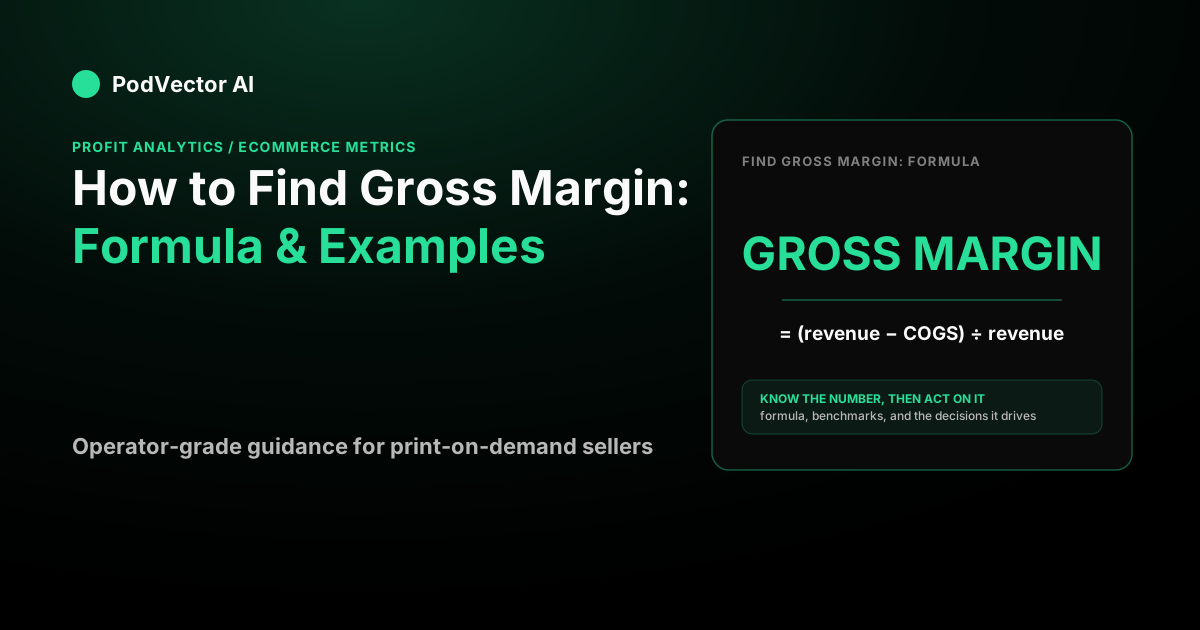
Gross margin % = (Revenue − COGS) ÷ Revenue × 100
Three steps, in order:
- Add up revenue for the period — net sales, after discounts and returns.
- Add up COGS — the direct cost of the goods you sold.
- Divide gross profit by revenue and multiply by 100.
You can run this on a single order, a single product, or a whole month. The formula does not change; only the numbers you feed it do.
What counts as COGS
COGS is where the calculation goes wrong, so be strict. COGS is the direct cost of the product that left your door:
- For a retailer: the wholesale price you paid for the unit.
- For a maker: raw materials plus the direct labor to build it.
- For print-on-demand: the blank garment, the print cost, and the supplier's base fulfillment charge baked into the item.
What does not belong in COGS: ad spend, your Shopify subscription, rent, salaries, or the freelancer who edits your product photos. Those are operating costs, and they hit later lines — net margin, not gross margin. Mixing them in understates your gross margin and hides which products are actually pulling their weight.
A worked example, start to finish
Say you run a print-on-demand apparel store. Take one average order and lay out the money.
| Line | Amount |
|---|---|
| Revenue (one order) | $40.00 |
| − COGS (blank + print + base fulfillment) | −$16.00 |
| = Gross profit | $24.00 |
Now apply the formula:
Gross margin = ($40.00 − $16.00) ÷ $40.00 × 100 = 60%.
So sixty cents of every dollar survives the product cost. On a month of 1,000 orders at that same shape, revenue is $40,000, COGS is $16,000, and gross profit is $24,000 — the margin percentage is identical because every order carries the same ratio. That is the useful property of a ratio: it scales.
For context, a sixty-percent gross margin is right in the normal band for print-on-demand. TrueProfit's 2026 benchmark, drawn from thousands of stores, puts print-on-demand around 60–65% and calls a 60–70% gross margin the range that makes profitable scaling possible. Opensend's roundup lands in the same neighborhood, pegging print-on-demand near 65% and apparel broadly at 40–60%. Your own number is the one that matters — but if you land far below that band, your COGS or your pricing needs a look.
Gross margin by product type
Margins vary wildly by what you sell, so a "good" number is category-specific. Per Opensend's benchmark data, beauty and skincare run high at 65–85%, digital products can hit 70–90%, apparel sits around 40–60%, and electronics get squeezed to 15–25% because the hardware itself eats most of the price.
The takeaway: don't compare your apparel margin to a skincare brand's and panic. Compare within your category. If you sell across categories, calculate gross margin per product line — a blended store-wide margin can hide a money-losing SKU behind a star performer.
Where most guides stop — and why that's dangerous
Here is the profit angle the SERP loves to skip. Gross margin only subtracts COGS. It says nothing about the costs that actually decide whether an order made money.
Walk the same forty-dollar order further down:
| Line | Amount | Running total |
|---|---|---|
| Gross profit (from above) | $24.00 | |
| − Shipping | −$5.00 | $19.00 |
| − Payment processing (4%) | −$1.60 | $17.40 |
| − Pick & pack labor | −$1.40 | $16.00 |
| − Ad spend (allocated) | −$10.00 | $6.00 |
That 60% gross margin just became six dollars of real profit per order — a 15% margin after the variable costs that gross margin ignores. This deeper number is called contribution margin, and it is the honest read on whether an order is worth selling through a given channel.
The lesson: gross margin tells you if a product is worth making. Contribution margin tells you if it's worth selling at your current ad costs. You need both. If you only watch gross margin, you can scale a "60% margin" store straight into a loss because the ads and shipping quietly ate the rest.
That is also why net margins look so thin industry-wide. Even with healthy gross margins, Opensend reports most ecommerce net profit margins land between 10% and 20% once every operating cost is subtracted.
Gross margin vs. markup — don't confuse them
A classic pricing error: mixing up margin and markup. They describe the same gap but divide by different things.
- Markup is the gap over your cost: ($40 − $16) ÷ $16 × 100 = 150%.
- Margin is the gap over your price: ($40 − $16) ÷ $40 × 100 = 60%.
Same twenty-four-dollar gap. A 150% markup is a 60% margin. Suppliers and marketplaces quote markup; your P&L quotes margin. If you set prices by copying a "keystone" markup rule but track the business on margin, keep the two straight or your break-even math will be wrong.
How to use gross margin once you have it
The number is a starting point, not a scoreboard. A few practical moves:
- Set a floor. Decide the lowest margin you'll accept per product and drop or reprice anything under it.
- Find break-even ROAS. Divide 1 by your contribution-margin ratio to see the return on ad spend you must clear just to avoid losing money. It's a core input for how you measure blended ROAS across every channel.
- Feed it into lifetime value. A margin-adjusted customer value is far more honest than a revenue-only one.
Gross margin is one node in a connected system of metrics. For the full map of how it links to CAC, contribution margin, and ROAS, see the ecommerce metrics guide, which walks the whole chain with one consistent example. And once traffic and conversion enter the picture, a conversion-rate calculator and a reach calculator turn those margin dollars into a plan for growth.
Why per-order margin is so hard to see in real life
The formula is trivial. Getting accurate COGS across live orders — with real shipping, real processing fees, and real ad spend allocated per order — is the actual work. Most sellers stitch it together in a spreadsheet once a month, long after the decisions that mattered.
This is the problem PodVector is built for. It connects Shopify, Meta Ads, Google Ads, Printify, and Printful, then computes the true per-order profit — COGS, fees, shipping, and ad spend netted out — so the six-dollar number, not just the sixty-percent one, is sitting in front of you. Victor, its AI employee, reads that live data, flags where margin is leaking, and can act on the Shopify side with your approval. He proposes ad moves but does not touch your ad account — the writes he makes are yours to sign off on. It's not a dashboard you have to go read; it's an employee working your numbers.
FAQs
What is the formula to find gross margin?
Gross margin % = (Revenue − COGS) ÷ Revenue × 100. Subtract cost of goods sold from revenue to get gross profit, divide that by revenue, and multiply by 100 to express it as a percentage. To get gross profit in dollars instead, just stop at Revenue − COGS.
What's the difference between gross profit and gross margin?
Gross profit is a dollar amount (Revenue − COGS). Gross margin is that same figure expressed as a percentage of revenue. If a forty-dollar order costs sixteen dollars to make, gross profit is twenty-four dollars and gross margin is 60%. Same gap, different units.
What should be included in COGS?
Only the direct cost of the goods you sold: wholesale cost, raw materials plus direct build labor, or — for print-on-demand — the blank, the print, and the supplier's base fulfillment charge. Leave out ad spend, software, rent, and salaries. Those are operating costs that belong on later lines, not in gross margin.
Is a 60% gross margin good?
For many product types, yes. TrueProfit's 2026 benchmarks call a 60–70% gross margin the range that makes profitable scaling possible and place print-on-demand around 60–65%. But "good" is category-specific — electronics often run 15–25% while beauty can hit 65–85%. Compare within your own category.
Why is my gross margin healthy but my profit low?
Because gross margin only subtracts COGS. Shipping, payment fees, fulfillment labor, and ad spend all come out after gross profit. Track contribution margin (revenue minus every variable cost) to see real per-order profit. It's common — most ecommerce net margins land between 10% and 20% even with strong gross margins.
How do I find gross margin for a whole month instead of one order?
Use the same formula with monthly totals: add all net revenue, add all COGS for units sold that month, then apply (Revenue − COGS) ÷ Revenue × 100. Because it's a ratio, the monthly percentage matches the per-order percentage as long as your product mix and costs stay consistent.